
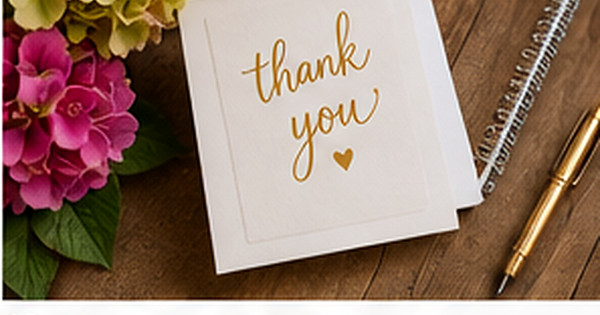
When to Send a Handwritten Card Instead of a Text or Email
Posted by Affordable Address Labels on May 15th 2018

Texts and emails are fast, useful, and appropriate for everyday communication. A handwritten card becomes valuable when the message deserves a physical reminder, a more deliberate tone, or space that does not compete with notifications.
The choice is not about making communication formal. It is about matching the medium to the emotional weight of the moment. A short sincere card can carry more meaning than a long digital message because the recipient can hold, keep, and revisit it.
Send a card for specific gratitude
A handwritten thank-you is especially appropriate for a significant gift, extended hospitality, professional mentorship, personal help during a difficult period, or effort that went beyond expectations. Name the specific act and explain what it meant to you.
A text can acknowledge the gift immediately, followed by a card within a reasonable time. The two formats do not compete; the first confirms receipt, and the second expresses thoughtful gratitude.
Use cards for sympathy and support
Grief, illness, caregiving, and major setbacks can be difficult to address digitally. A card allows the recipient to read the message privately and return to it later without feeling pressure to respond.
Keep the message simple and avoid trying to explain or fix the situation. A specific memory, an offer of practical help, or a sentence of steady support is enough.
Mark milestones that may be saved
Weddings, new babies, graduations, retirements, first homes, anniversaries, promotions, and major birthdays often become part of a keepsake box. A card gives the recipient a dated record of the people who celebrated with them.
Choose a design that fits the person rather than the seriousness of the event alone. Warm, funny, restrained, or elegant can all be appropriate when the message feels genuine.
Strengthen professional relationships thoughtfully
A card can be effective after a referral, completed project, interview, client milestone, or act of professional generosity. Avoid promotional language. The value comes from personal acknowledgment, not a sales pitch.
Use business stationery that identifies the sender clearly, and hand-sign the message even when the card includes printed branding.
Moments that often deserve a card
- Meaningful gifts or hospitality
- Sympathy and serious illness
- Weddings and new babies
- Graduations and retirements
- Professional referrals
- Personal help during a difficult time
- Milestones likely to be remembered
Review the design in the context where it will be used
Place a printed sample of the when to send a handwritten card on the actual envelope, card, container, or package. Scale, color, and spacing can feel very different on a real object than they do in an enlarged online preview. The surrounding materials should support the design rather than compete with it.
Read every personalized line aloud and compare the address against a trusted source. Check names, abbreviations, apartment numbers, ZIP codes, and punctuation. When two people share the proofing task, one can read the original information while the other checks the final design line by line.
Finally, decide how the item will be stored and reordered. Save the design name, product number, quantity, and order date. That information turns a successful first purchase into a dependable part of the household stationery routine.
Common mistakes to avoid
- Choosing style before confirming the wording
- Reducing type until a long line barely fits
- Using too many fonts or decorative elements
- Ignoring the color of the final envelope or surface
- Ordering a large quantity before testing one sample
A careful proof and a small real-world test prevent most of these problems. Make the design attractive, but let accuracy, readability, and ease of use guide the final decision.
Frequently asked questions
Is a late card still worth sending?
Usually yes. Briefly acknowledge the delay and focus on the sincere message rather than offering a long excuse.
How long should a handwritten note be?
Three to six thoughtful sentences are often enough. Specificity matters more than length.
Can a text replace a thank-you card?
For small everyday favors, yes. For significant gifts, hospitality, or support, a card often feels more complete.
Should business cards include promotional offers?
A thank-you card is usually stronger without a sales message. Keep the focus on the relationship and the specific reason for writing.
Build a stationery system that fits real life
The best personalized paper goods are the ones you reach for often. Choose clear, accurate designs, store them where correspondence happens, and reorder before a holiday or event creates a rush. Explore personalized address labels, rubber stamps, and greeting cards to create a practical set for home, celebrations, or business mail.