
Thanksgiving Card Ideas and Etiquette
Posted by Affordable Address Labels on Oct 18th 2024
Thanksgiving cards occupy a useful space between everyday thank-you notes and year-end holiday cards. They can carry gratitude without the gift expectations or crowded schedules that sometimes surround December mail. For people who do not exchange Christmas cards, they also provide a warm seasonal way to reconnect.
The most effective Thanksgiving message is not a general statement about being thankful. It identifies a person, action, memory, or relationship that made the year better.
Choose recipients based on gratitude, not tradition
Start with people whose support might otherwise go unacknowledged: relatives who host, neighbors who help, teachers, caregivers, volunteers, mentors, customers, vendors, and friends who remained steady during a difficult season.
A small list allows each message to be personal. If you also send December cards, use Thanksgiving notes for the people you want to thank specifically rather than duplicating the same update twice.
Write a message with one concrete reason
A useful formula is: name the quality or action, describe its effect, and offer a warm wish for the season. “Thank you for checking on us after the storm; your calls made a stressful week feel less lonely” says more than “We are grateful for you.”
Family updates can be included, but keep gratitude at the center. A brief story about a shared meal, trip, project, or conversation helps the recipient understand why the memory remains important.
Choose a card style that fits the relationship
Autumn leaves, harvest colors, botanical designs, and simple typographic cards can all work. Religious wording may be meaningful for some recipients and less appropriate for others. A neutral exterior with a personal handwritten message offers the most flexibility.
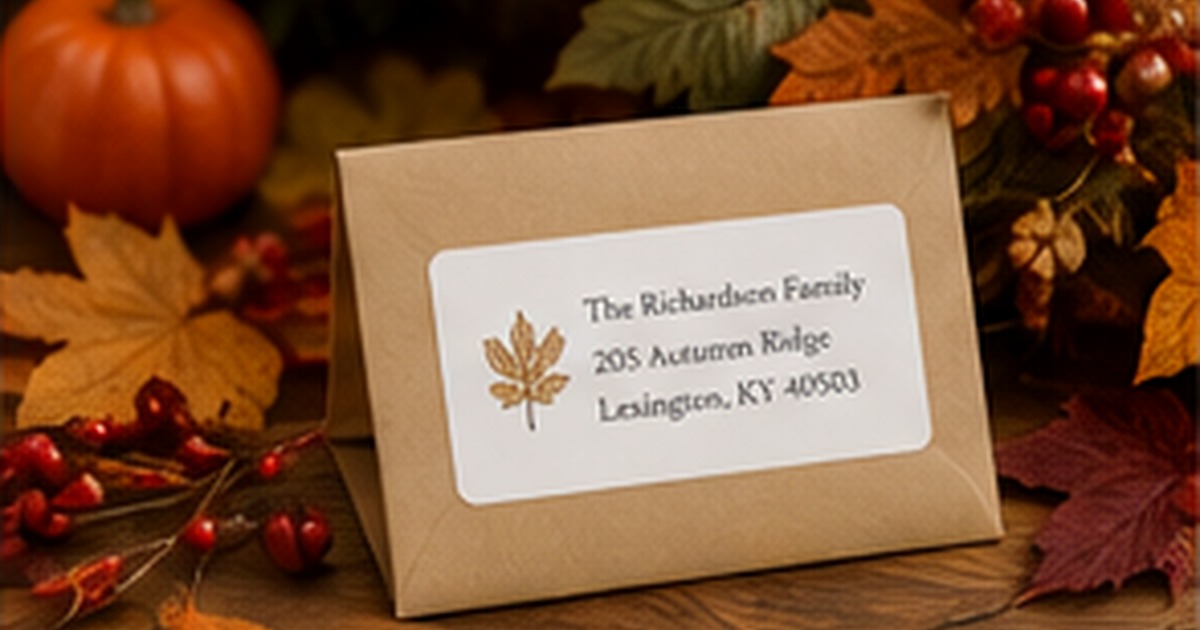
Kraft, cream, burgundy, olive, and warm white envelopes pair well with fall palettes. Use a light or high-contrast address label on darker colors, and test metallic pens before addressing the entire stack.
Send personal and business notes with different goals
A personal card can be intimate and reflective. A business Thanksgiving note should be concise, inclusive, and focused on appreciation rather than sales. Avoid turning a gratitude message into a coupon delivery unless a promotion is genuinely expected by the audience.
Mail cards early enough to arrive before the holiday week becomes busy. For hosts, a separate thank-you card after the gathering may still be appropriate because it recognizes the specific hospitality.
Plan the mailing as a small repeatable project
Break the work into list cleanup, addressing, personal notes, postage, and final mailing rather than trying to complete every step in one sitting. A simple status column on the recipient list prevents duplicate cards and shows exactly what remains when the project is interrupted.
After the season, record returned envelopes, newly confirmed addresses, and the quantity of cards left over. Ten minutes of cleanup now prevents the next holiday mailing from beginning with the same questions and helps the following order match the actual list.
Use the card to preserve a small piece of family history
A Thanksgiving card can record a detail that might otherwise be forgotten: who hosted, a recipe that returned to the table, a new family member, or a tradition that changed. One sentence about the year gives relatives something more lasting than a generic seasonal greeting.
When writing to older family members, invite a memory in return. Ask about a childhood holiday, a favorite dish, or the person who taught them a tradition. The reply may become part of the family archive and can inspire next year’s gathering or card message.
Quick checklist
- Choose people you genuinely want to thank
- Mention one specific action or quality
- Keep family updates secondary to gratitude
- Use readable addressing on dark fall envelopes
- Separate appreciation from promotion
- Mail before the busiest holiday week
Frequently asked questions
Can a Thanksgiving card replace a Christmas card?
Yes. Some households prefer fall timing, inclusive gratitude language, or less crowded mailboxes.
Should businesses send cards to every customer?
A targeted list with sincere wording may be more meaningful than a generic mass mailing. Consider key customers, partners, staff, and vendors.
What if the recipient is grieving?
Acknowledge that the season may feel different and offer care without forcing cheerful language. A quiet message of gratitude for the relationship is appropriate.
Give gratitude a physical place to land
Thanksgiving mail is memorable because it arrives with a reason, not merely a schedule. Choose seasonal greeting cards, add a specific handwritten message, and finish the envelope with warm personalized address labels that keep the practical details polished and clear.