
Thank-You Card Etiquette: What to Write and When to Send It
Posted by Affordable Address Labels on Aug 23rd 2025
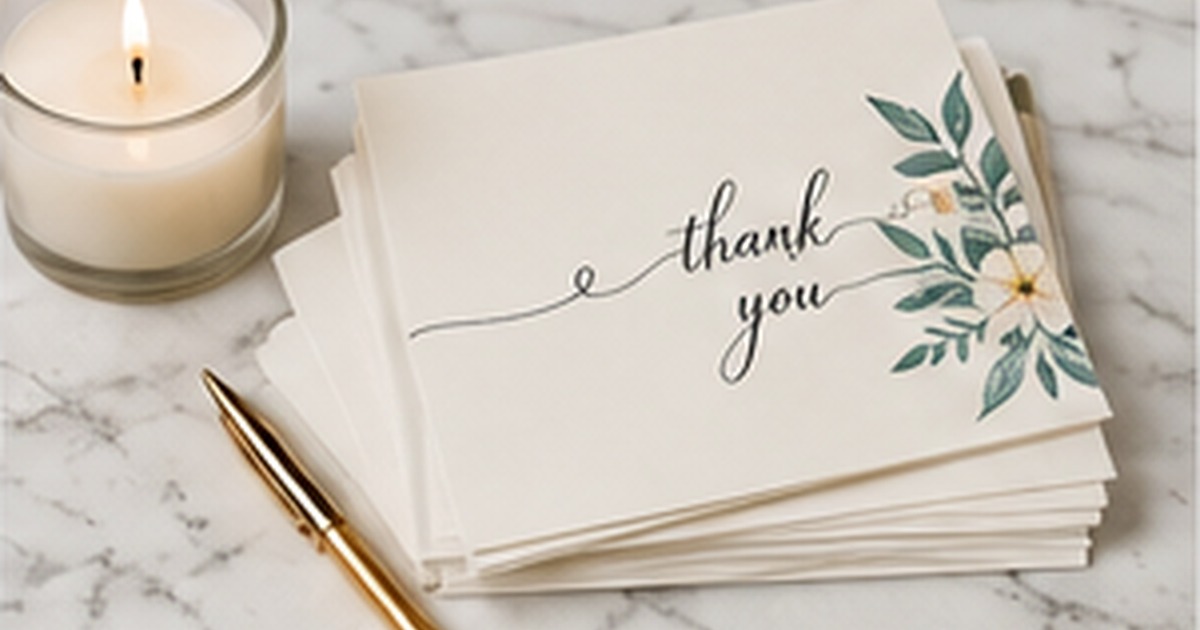
A good thank-you card does more than confirm that a gift or favor was received. It tells the other person what their effort meant and gives them a small, tangible moment of appreciation. That is why a short handwritten note can feel more personal than a longer text message.
Etiquette should make gratitude easier to express, not create anxiety about perfect wording. Send the note while the details are fresh, mention something specific, and use a tone that sounds like you.
Send the note sooner than feels necessary
For everyday gifts, hospitality, meals, introductions, or practical help, aim to send a card within a few days. Wedding and major-event notes may take longer because of the volume, but beginning promptly prevents a large backlog and helps each message stay specific.
A late note is still worth sending. Do not spend the first half apologizing for the delay. A brief acknowledgment—if needed—followed by sincere thanks is better than allowing embarrassment to turn into silence.
Use a simple four-part structure
Open with the recipient's name, thank them for the specific gift or action, explain how it will be used or why it mattered, and close with a forward-looking line. This structure is flexible enough for a birthday gift, a neighbor's help, a professional referral, or a meal after a difficult week.
Specific detail is what separates a real note from a template. Instead of “Thank you for the lovely gift,” write that the serving bowl was used at Sunday dinner or that the book is already on the nightstand. The detail does not need to be clever; it only needs to be true.
Match the tone to the relationship
A close friend may receive a warm, conversational note with humor. A client, interviewer, teacher, or community volunteer may call for a more polished tone. Formal does not mean stiff. Clear appreciation and one personal observation are usually enough.
When thanking someone for money, you do not need to state the amount. Mention the planned use when appropriate. For sensitive help—such as meals, transportation, or support during illness—focus on the relief or comfort the gesture provided rather than describing private circumstances in detail.
Create a routine that makes notes happen
Keep cards, envelopes, stamps, addresses, and a dependable pen in one place. Write one or two notes at a time instead of waiting for a free afternoon. After a wedding or large celebration, divide the list by giver, event, or week and record the mailed date.
Return address labels reduce repetitive setup, but the message inside should remain personal. If two people received the gift together, decide whether both will sign each card or divide the list and use language that represents the household accurately.
Make the card easy to send, not merely easy to buy
Keep cards with envelopes, stamps, a reliable pen, and current addresses in one defined place. The fewer supplies that must be collected, the more likely a thoughtful message will be written while the reason for sending it is still fresh.
Review unused cards twice a year. Move versatile designs to the front, set aside occasion-specific cards for the next season, and remove pieces that no longer fit the relationships or events in your life. A smaller useful collection is better than a crowded drawer.
Quick checklist
- Name the specific gift or action
- Explain why it mattered
- Use a tone that fits the relationship
- Add a forward-looking sentence
- Sign clearly
- Mail the card even if it is later than planned
Frequently asked questions
Is a text message ever enough?
Yes for many casual everyday gestures, especially when speed matters. A card is especially meaningful for gifts, hospitality, professional support, major events, or sustained help.
Should children write their own thank-you notes?
As soon as they are able, children can sign, draw, dictate a sentence, or write part of the note. The goal is to build the habit of specific gratitude.
Can I use printed wording inside the card?
Yes, but add at least one handwritten sentence tied to the person or gift. The personal line carries most of the meaning.
Make gratitude concrete
The best thank-you note is specific, sincere, and sent. Keep a small supply of thank-you cards with matching return address labels so appreciation can move from intention to the mailbox while the moment is still fresh.