
Teacher Supply Labels: Designing a Classroom System Students Can Follow
Posted by Affordable Address Labels on May 9th 2022
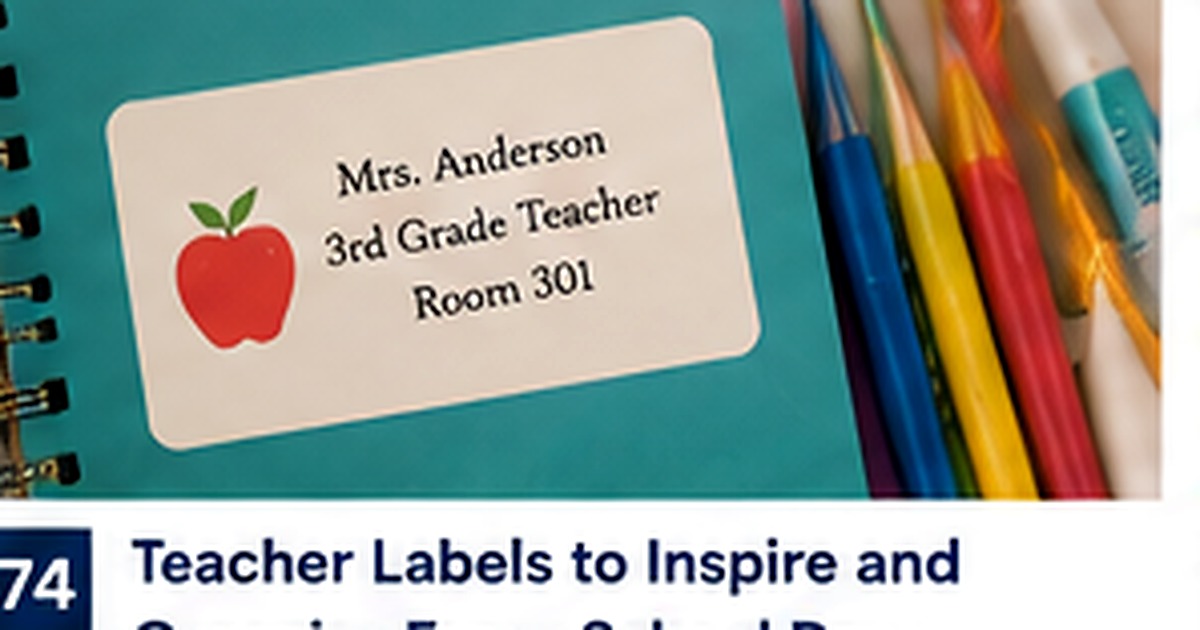
A classroom labeling system should help students act independently. Beautiful bins are not enough if children cannot tell where pencils, notebooks, scissors, and completed work belong.
The best labels combine plain language with consistent visual cues. They match the age of the students, the physical storage, and the routines used during the school day.
Use the words students actually hear
Label a bin “Turn In” if that is the phrase used during instruction. Avoid clever category names that require explanation. Consistent vocabulary connects spoken directions with the physical room.
Pair text with simple icons
Young readers and multilingual learners benefit from recognizable images. A pencil icon, glue bottle, book, or folder can reinforce the written label. Keep icons simple and use the same style throughout the room.
Create color zones without relying on color alone
Color can separate subjects, groups, or types of supplies, but every label should still include readable words. This supports students with color-vision differences and helps substitute teachers understand the system.
Place labels where the decision happens
A label should be visible before the student removes or returns an item. Front-facing bin labels, shelf-edge markers, and folder tabs are more useful than labels hidden on lids or inside cabinets.
Teach and revise the system
Model how supplies move through the room, then observe where students hesitate. If a label is repeatedly ignored, change the wording or placement. A classroom system should be tested by real student behavior.
Common organization mistakes to avoid
A frequent mistake with teacher supply labels classroom system is creating too many categories before the household or office has tested the routine. Detailed labels may look organized but slow people down when several bins seem equally correct. Another problem is using decorative wording that is not part of everyday language. Start with broad, obvious actions and add detail only where items repeatedly become misplaced. Labels should reduce decisions, not create a new filing project that requires constant explanation.
Run a two-week real-life test
Use temporary labels or a small first set for two weeks. Watch where papers and supplies naturally accumulate, which categories overflow, and which labels nobody uses. Ask other household or staff members to locate and return items without guidance. Use familiar classroom vocabulary should be possible without opening several containers or reading a separate key. Move labels to the point of decision and rename categories using the words people actually say.
Build maintenance into the routine
Every organization system drifts as school schedules, work responsibilities, and storage needs change. Add a short monthly review to empty outdated material, combine underused categories, and update reorder levels. Pair words with simple icons is easier to maintain when one person owns the review but everyone understands the labels. Keep a few blank matching labels nearby for new categories so temporary handwritten notes do not become permanent clutter.
Document the version that works
Once the teacher supply labels classroom system setup has been tested, save the exact wording, dimensions, image choice, order date, and quantity in a simple household or business file. Include a photograph of the finished piece and note any changes you would make next time. This record shortens future proofing, prevents old addresses or names from returning, and makes reordering easier for another family member or employee. Good documentation turns a one-time stationery decision into a dependable repeatable process.
Quick checklist
- Use familiar classroom vocabulary
- Pair words with simple icons
- Keep text even when using color zones
- Place labels at the point of use
Frequently asked questions
How many colors should a classroom use?
Use a limited set tied to meaningful categories. Too many colors become another code students must memorize.
Should every individual item be labeled?
Label shared containers and high-loss items first. Individual labeling is useful when ownership matters.
Can students help design the system?
Yes. Student input can reveal which words and locations are most intuitive.
Put the system into practice
A clear plan makes stationery easier to use and easier to reorder. Review the wording at actual size, choose a realistic quantity, and explore custom labels that fit the way the household or business actually communicates.