
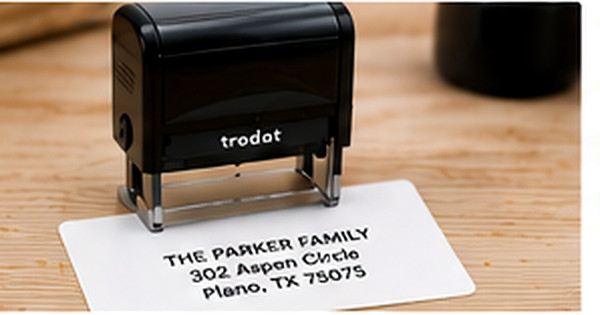
Stamp Choice by Workflow: Self-Inking vs Pre-Inked for 25, 100, or 500 Impressions
Posted by Affordable Address Labels on Mar 19th 2019
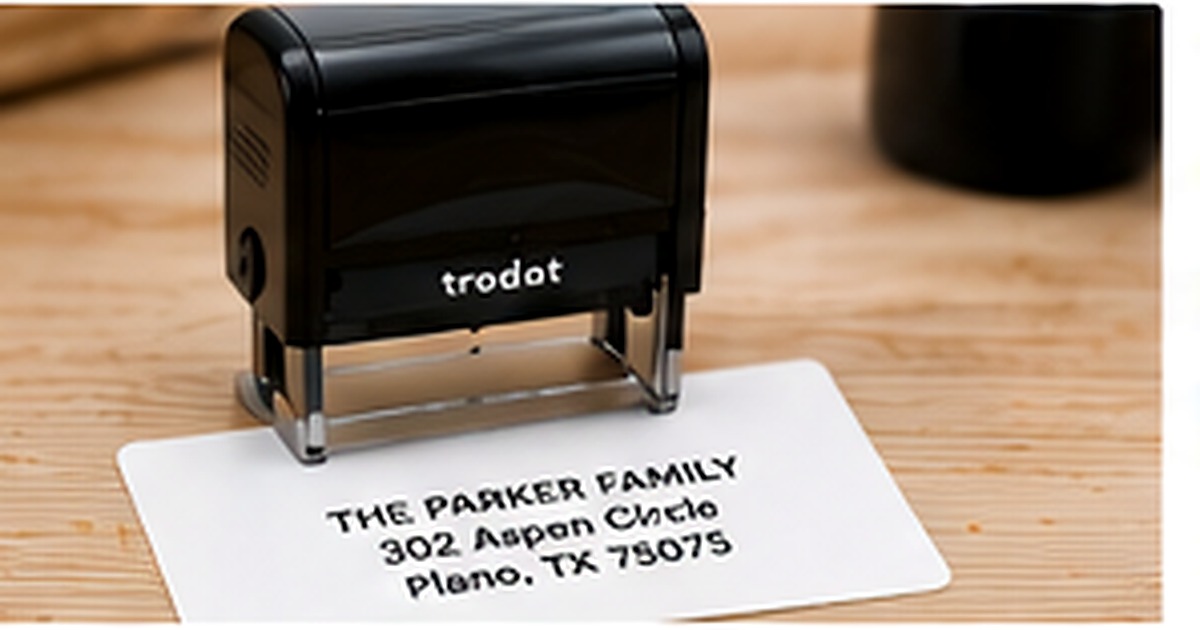
The right stamp depends less on marketing labels and more on the way it will be used. A household stamping twenty-five holiday envelopes has different needs from an office processing hundreds of forms in one session.
Comparing self-inking and pre-inked models by workflow volume makes the decision clearer. Consider pace, impression consistency, hand comfort, refill method, and the amount of detail in the design.
Light use: about twenty-five impressions
For occasional household mail, either style can work well. A self-inking model offers a familiar press-and-release motion and is easy to position. A pre-inked model may provide a crisp impression with fewer moving parts. At this volume, design preference and storage convenience often matter more than duty cycle.
Medium use: around one hundred impressions
When a full invitation or holiday-card batch is prepared at once, rhythm and ergonomics become important. Self-inking stamps cycle quickly because the die automatically returns to the ink pad. Pre-inked stamps can produce excellent detail, but the user may need a slightly more deliberate press for uniform coverage.
High use: several hundred impressions
For offices and businesses, check the manufacturer’s rated impression capacity and refill procedure. High-volume work benefits from a stable base, comfortable grip, replaceable or refillable ink system, and consistent positioning. The cheapest unit may cost more if it requires frequent replacement or creates unreadable impressions.
Match the design complexity to the mechanism
Fine logos, small serif type, and detailed borders need strong impression quality. Simpler address layouts are forgiving. Request or review a proof at actual size, and avoid compressing too much information into a small stamp area.
Plan for maintenance before the first refill
Know the correct ink type, replacement pad, cleaning method, and storage position. Using incompatible ink can damage the die or create permanent smearing. A labeled maintenance kit makes future care much easier.
Common stamp mistakes to avoid
The most common problems with self inking vs pre inked stamp volume begin before the first impression is made. Buyers often choose a design that is too small for the amount of text, use the wrong ink during maintenance, or press unevenly on a soft or textured surface. Another mistake is testing only once and assuming the result will stay consistent through a long session. Use a firm work surface, inspect several consecutive impressions, and keep the proof and refill information with the stamp. A simple maintenance note prevents guesswork months later.
Test the complete workflow
Before using the stamp on an important mailing, make ten practice impressions on comparable paper. Check the first, middle, and last examples for fading, smearing, and missing edges. Time the process if speed matters, and notice whether hand position remains comfortable. The test should confirm more than appearance; it should show that the tool fits the actual volume and surface. Estimate impressions per session, not only per year, and record the paper and ink combination that produces the most reliable result.
Know when to revise or replace
A stamp system should be reviewed when addresses change, fine details stop printing cleanly, the mechanism begins sticking, or the work volume increases substantially. Re-inking can restore a healthy unit, but it cannot correct an undersized design or damaged die. Keep one clean reference impression after purchase so future output can be compared against it. Consider hand comfort for repeated use remains a useful decision rule when maintenance or replacement is being considered.
Document the version that works
Once the self inking vs pre inked stamp volume setup has been tested, save the exact wording, dimensions, image choice, order date, and quantity in a simple household or business file. Include a photograph of the finished piece and note any changes you would make next time. This record shortens future proofing, prevents old addresses or names from returning, and makes reordering easier for another family member or employee. Good documentation turns a one-time stationery decision into a dependable repeatable process.
Quick checklist
- Estimate impressions per session, not only per year
- Consider hand comfort for repeated use
- Match fine details to a suitable stamp size
- Confirm the correct refill and replacement supplies
Frequently asked questions
Which type is faster?
Self-inking stamps are often faster for continuous repetitive work because the die re-inks automatically between impressions.
Which type gives the sharpest detail?
Both can be sharp when properly designed and maintained, though pre-inked models are often chosen for fine detail.
Can ordinary stamp-pad ink be used for refills?
Only if the manufacturer specifies it. Use the correct formulation for the stamp mechanism.
Put the system into practice
A clear plan makes stationery easier to use and easier to reorder. Review the wording at actual size, choose a realistic quantity, and explore address stamps that fit the way the household or business actually communicates.