
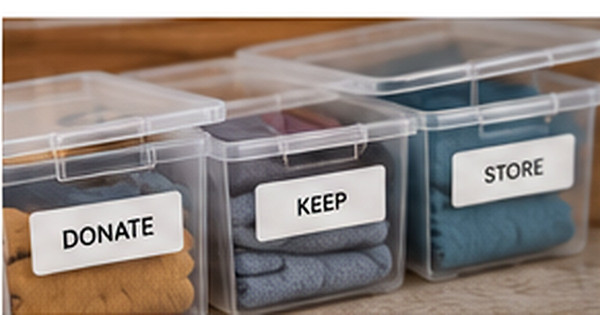
Spring Cleaning Labels: A Keep, Donate, and Store System That Prevents Re-Clutter
Posted by Affordable Address Labels on Feb 12th 2020
Spring cleaning often stalls because every object creates a new decision. A labeled sorting system removes some of that mental load by giving each item a clear next destination.
The key is using categories that lead to action. “Keep” and “donate” are useful, but adding “relocate,” “repair,” and a dated “decide later” bin prevents uncertain items from quietly returning to the same cluttered shelf.
Set up the sorting stations before opening a closet
Prepare labeled bins, boxes, or floor zones before you begin. Keep, donate, relocate, repair, recycle, and trash cover most household decisions. A temporary “decide later” category can help maintain momentum, but give it a firm review date. When the destinations already exist, each item can move immediately instead of forming a pile that must be sorted again.
Use location labels for items that belong elsewhere
Many things are not clutter because they are unwanted; they are clutter because they are in the wrong room. A relocate box can be divided by destination such as kitchen, office, bedroom, or garage. At the end of the session, carry each group to the correct area. This prevents repeated trips during sorting and keeps the project focused.
Label stored containers with useful specifics
A label such as “miscellaneous” rarely helps later. Write the contents and, when useful, the season, person, or project. “Guest bedding — queen” is better than “linens,” and “winter gloves — children” is better than “clothes.” Clear labels reduce duplicate purchases and stop storage areas from becoming unopened mystery boxes.
Move donation and recycling items out promptly
A donate box that remains in the hallway becomes a new form of clutter. Add the destination and target date to the label, then schedule the drop-off or pickup. Recycling and disposal items should also leave quickly. The sorting system succeeds only when each category reaches its final destination.
Use the same labels for short maintenance sessions
Keep a few reusable category cards or bins available after the major cleanout. A fifteen-minute weekly reset becomes easier when everyone knows where relocate, donate, or repair items belong. The labels turn a one-time project into a repeatable household routine and reduce the chance that clutter will rebuild in the same areas.
A one-room example
For a hall closet, place labeled containers outside the door before removing anything. Coats that fit return to the closet, outgrown items go directly into donate, sports equipment moves to a labeled garage bin, and damaged items enter a repair box with a review date. Once the closet is empty, clean the shelves and return only the keep items. The labels guide the sequence and prevent the hallway from becoming a new holding area.
Common decluttering mistakes
Do not create a large “miscellaneous” bin or allow “decide later” to remain open indefinitely. Avoid buying permanent storage containers before you know what will stay. Donation boxes should not become long-term furniture, and labels should describe contents rather than aspirations. A realistic category used consistently is more effective than a perfect-looking system no one follows.
Do one real-world review before finalizing
Before committing to the final approach, create one complete sample using the actual materials, names, address details, containers, or stationery involved in spring cleaning labels. View it in normal light, handle it the way a recipient or household member would, and ask another person what they notice first. This last review catches small problems with scale, wording, placement, and usability. Record the approved choices so a future reorder or update begins from a tested version rather than an old draft or memory.
Quick checklist
- Create all sorting categories before beginning
- Use specific destination labels
- Add deadlines to donate and decide-later bins
- Keep a small reset system available year-round
Frequently asked questions
How long should a decide-later bin stay open?
Choose a short, specific review period such as two or four weeks. An undated bin usually becomes permanent storage.
Should storage labels list every item?
Not every object, but they should be specific enough that someone can find the contents without opening several boxes.
Can the same bins be reused each season?
Yes. Removable or replaceable labels make sorting bins easy to reuse for future projects.
Put the plan into practice
A thoughtful system is easier to use when the design and supplies support the real task. Explore custom labels to create coordinated pieces that remain clear, practical, and personal.