
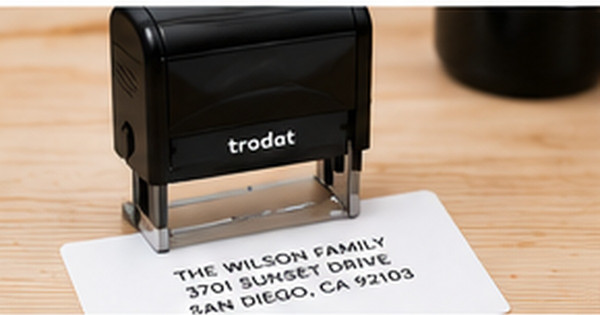
Self-Inking vs Pre-Inked Stamps for High-Volume Home and Office Use
Posted by Affordable Address Labels on Jun 18th 2019
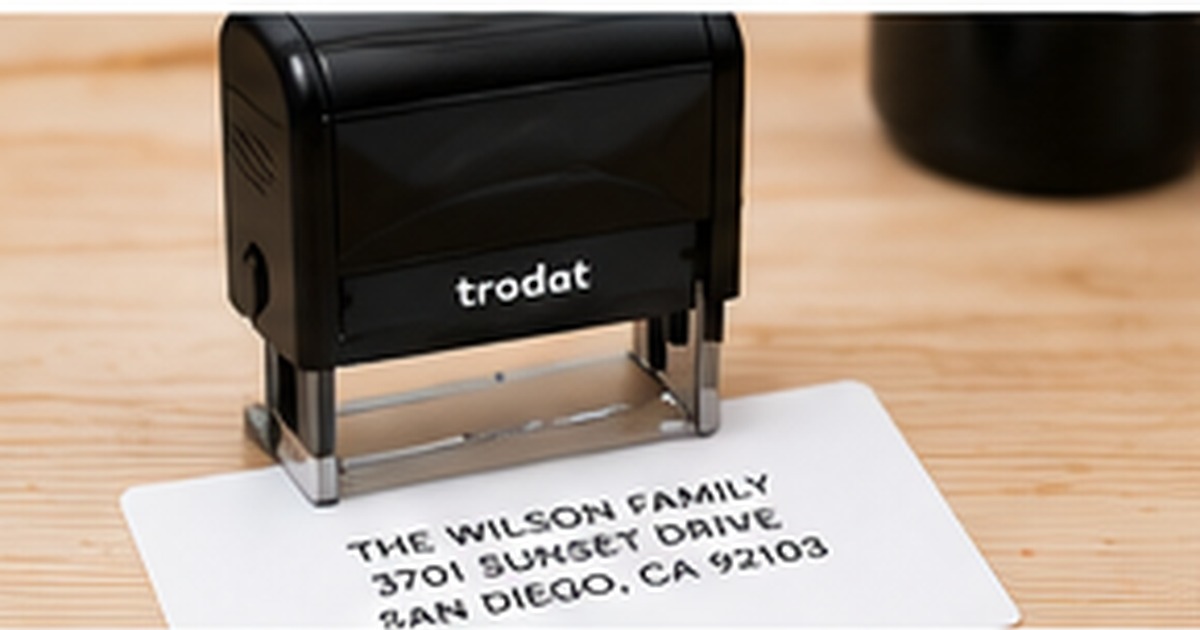
When a stamp is used occasionally, almost any good mechanism can feel satisfactory. High-volume use exposes the differences quickly: hand fatigue, re-inking frequency, impression consistency, drying time, and how easily the unit can be positioned on repeated pieces.
Choosing between self-inking and pre-inked formats should begin with the work being done. A household preparing hundreds of holiday envelopes may value different features than an office stamping forms throughout the day.
Understand how the two mechanisms work
A self-inking stamp rotates between an internal pad and the paper, automatically re-inking after each impression. A pre-inked stamp stores ink within the die material and presses directly onto the surface. The construction affects feel, sound, maintenance, and the way the impression appears after many repeated uses.
For this part of the project, use a real sample instead of relying only on a screen preview. Check the wording, size, placement, and workflow with the people who will actually use it. A small test often reveals an issue before it affects an entire order or mailing.
Compare speed and hand motion
Self-inking units are designed for repetitive rhythm and usually feel natural during a long batch. The housing guides the die and keeps hands away from the ink surface. Pre-inked models can also be fast, but pressure and positioning may feel different. Test the grip size and press action if the stamp will be used by several people or by someone with limited hand strength.
For this part of the project, use a real sample instead of relying only on a screen preview. Check the wording, size, placement, and workflow with the people who will actually use it. A small test often reveals an issue before it affects an entire order or mailing.
Evaluate impression detail and ink coverage
Pre-inked stamps are often selected for dense, detailed designs because the ink is distributed through the die. Self-inking stamps provide dependable everyday impressions and are easy to use on common office paper. The actual result depends on design complexity, font size, surface texture, and whether the unit receives even pressure during use.
For this part of the project, use a real sample instead of relying only on a screen preview. Check the wording, size, placement, and workflow with the people who will actually use it. A small test often reveals an issue before it affects an entire order or mailing.
Plan for refills and maintenance
High-volume users should know the correct refill ink and replacement procedure before the stamp begins to fade. Mixing incompatible inks can damage the unit. Keep refill information with the stamp record, clean visible paper dust, and store the unit closed. Maintenance is easier when the purchase includes a clear model number and reorder reference.
For this part of the project, use a real sample instead of relying only on a screen preview. Check the wording, size, placement, and workflow with the people who will actually use it. A small test often reveals an issue before it affects an entire order or mailing.
Match the stamp to the work surface
Both formats perform best on absorbent paper. Coated labels, glossy cards, and nonporous packaging may require special ink or a different labeling method. Test the actual envelope or form before committing to a large workflow. A sharp impression on copy paper does not guarantee the same result on textured or coated stock.
For this part of the project, use a real sample instead of relying only on a screen preview. Check the wording, size, placement, and workflow with the people who will actually use it. A small test often reveals an issue before it affects an entire order or mailing.
Quick checklist
- Estimate daily or seasonal volume
- Compare grip and press motion
- Match detail level to the mechanism
- Record the correct refill ink
- Test the actual paper surface
Frequently asked questions
Which format is faster for hundreds of envelopes?
Many users prefer the rhythm of a self-inking stamp, but the best choice depends on grip comfort and the specific model.
Which one gives the sharpest detail?
Pre-inked models often handle fine detail well, though a properly designed self-inking die can also produce excellent results.
Can either type stamp glossy labels?
Standard inks may smear on glossy or nonporous surfaces. Test first or use a compatible specialty solution.
Build a dependable stationery system
Good labels and paper goods make communication easier when the design supports the real task. Review address stamps to create a coordinated solution that is readable, useful, and appropriate for the occasion.