
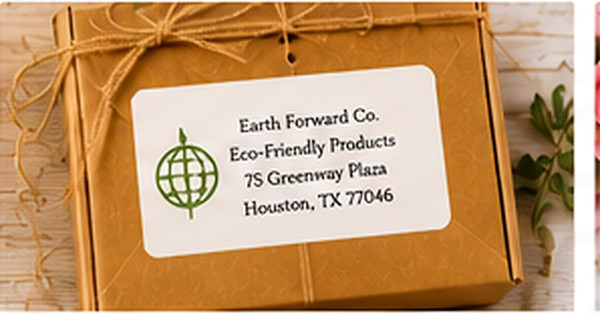
Recycled Paper Address Labels: What to Check Before Ordering
Posted by Affordable Address Labels on Jul 16th 2018
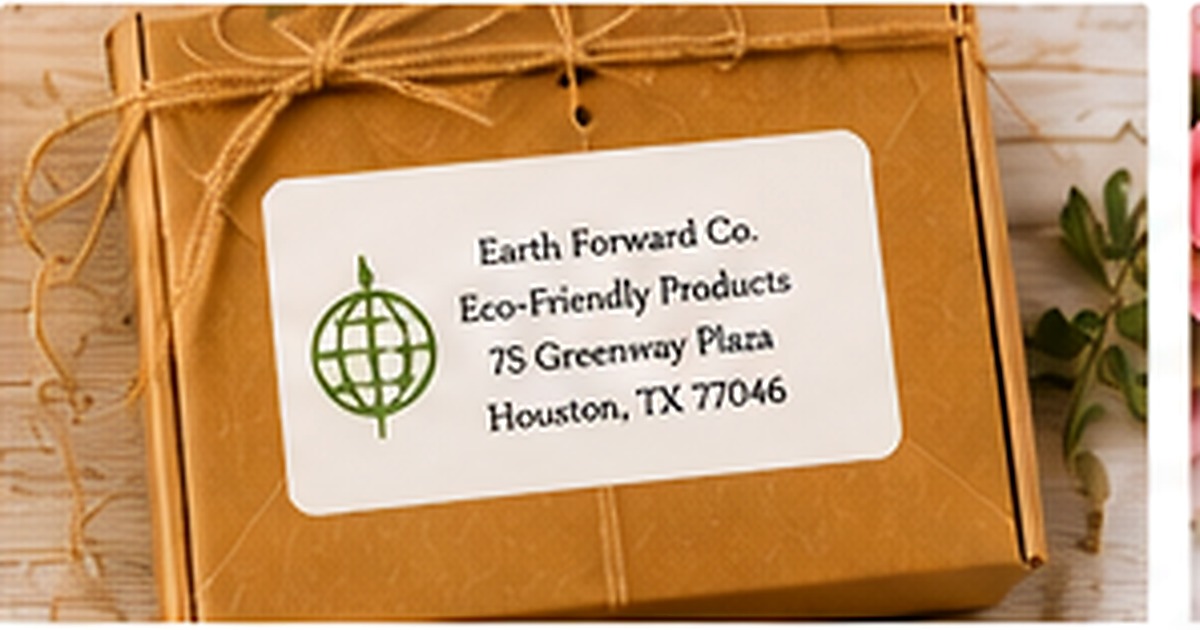
“Eco-friendly” can describe many different label choices, from recycled face stock to reduced packaging and smaller order quantities. The label that creates the least waste is not always the one with the most environmental language on the product page.
Before ordering recycled paper address labels, look at the full use case: where the labels will be applied, how clearly they print, how many you truly need, and whether the design will remain useful long enough to avoid disposal.
Understand what the recycled claim refers to
Recycled content may apply to the label paper, the liner, the packaging, or a combination of materials. Read the description carefully and avoid assuming that every component has the same recycled percentage. A clear product specification is more useful than a broad green claim.
Check contrast on natural and kraft surfaces
Recycled stocks often have warm, flecked, or kraft-colored backgrounds. Those textures can look attractive, but fine script and pale ink may lose clarity. Dark typography, simple line art, and generous spacing usually print more reliably. Review a full-size proof rather than judging only an enlarged screen image.
Match adhesive strength to the real surface
An environmentally thoughtful label still needs to stay attached through normal mailing and handling. Smooth envelopes, corrugated boxes, glass jars, and coated paper behave differently. Choose a label intended for the surface and avoid using more permanent adhesive than the task requires.
Reduce waste through quantity and design choices
Ordering a realistic quantity may have more impact than choosing a green-looking design and discarding half the supply later. Use flexible wording and a year-round motif when possible. Store sheets flat and dry so they do not curl or become unusable.
Consider packaging and shipping together
Minimal packaging, consolidated shipping, and combining related stationery into one order can reduce waste beyond the label itself. Sustainability is a system of practical decisions rather than a single material badge.
Common label mistakes to avoid
The most common problems with recycled paper address labels come from choosing appearance before function. Text is reduced until it is difficult to read, decorative elements compete with the address, or a label is ordered without testing the longest name and darkest envelope. Another mistake is ordering a large quantity before the wording and location are stable. Use an actual-size proof and judge the label in the setting where it will be used, not only as an enlarged image on a screen.
Test the design on real materials
Apply a sample to the smallest envelope, darkest paper, or most textured surface in the planned set. Complete the piece with recipient addressing and postage so spacing can be evaluated honestly. Ask another person to read the name and address without help. Confirm which components contain recycled material should be obvious at normal viewing distance. Testing one finished piece is inexpensive compared with discovering the problem after every envelope has been assembled.
Review quantity, storage, and future use
Labels remain useful only when the information stays accurate and the sheets are stored well. Keep them flat, dry, and grouped with the related stationery. Review the remaining quantity before each major mailing and remove outdated versions. Use high-contrast typography on natural stocks provides a practical standard for deciding whether to reorder, revise the design, or use a smaller temporary supply. A well-managed label system saves more time than an oversized collection of nearly correct options.
Document the version that works
Once the recycled paper address labels setup has been tested, save the exact wording, dimensions, image choice, order date, and quantity in a simple household or business file. Include a photograph of the finished piece and note any changes you would make next time. This record shortens future proofing, prevents old addresses or names from returning, and makes reordering easier for another family member or employee. Good documentation turns a one-time stationery decision into a dependable repeatable process.
Quick checklist
- Confirm which components contain recycled material
- Use high-contrast typography on natural stocks
- Select adhesive for the actual surface
- Order a realistic quantity with versatile wording
Frequently asked questions
Do recycled labels always look kraft-colored?
No. Recycled stocks can be white, cream, natural, or kraft depending on the manufacturing and finishing process.
Are recycled labels less durable?
Not necessarily. Durability depends on the face stock, adhesive, coating, and intended application.
What is the easiest way to reduce label waste?
Order fewer highly versatile labels and store them properly so the entire quantity remains usable.
Put the system into practice
A clear plan makes stationery easier to use and easier to reorder. Review the wording at actual size, choose a realistic quantity, and explore personalized address labels that fit the way the household or business actually communicates.