
Product Labels for Handmade Candles and Soaps: A Practical Starter Guide
Posted by Affordable Address Labels on Jan 30th 2021
Handmade candles and soaps are sensory products, but customers first encounter them through packaging. A clear, attractive label helps the product feel trustworthy and makes scents, sizes, and variations easier to distinguish.
Small makers benefit from starting with a simple label system that can expand. The goal is not to fit every brand story onto one sticker; it is to identify the product clearly and support the information the business is required to provide.
Separate the front display from detailed information
The front label usually needs the brand, product name, scent or variety, and a clear visual hierarchy. Additional details can move to a side, bottom, wrap, or insert when appropriate. This keeps the main presentation readable at shelf distance. Before finalizing, review the legal and marketplace requirements that apply to the specific product and location; decorative design should never replace required information.
Create a consistent system for scents and varieties
Use a repeatable layout so customers can compare products easily. Change one controlled element, such as accent color, botanical illustration, or scent name, while keeping the logo, type scale, and information placement stable. A system is easier to reorder and helps a table or online product photo look like one collection rather than unrelated items.
Test labels against heat, oil, moisture, and handling
Candles and soaps live in different environments from ordinary paper stationery. Containers may become warm, surfaces may carry oil or fragrance residue, and soap packaging can encounter humidity. Apply sample labels to the actual jar, tin, box, or wrap and observe them over time. Check edge lifting, smudging, and whether the label remains readable after normal handling.
Use photography and packaging together
A label that looks elegant in person should also remain legible in product photos. Strong contrast, a clear product name, and restrained detail help. Coordinate tissue, boxes, or bands with the label, but avoid introducing too many patterns. The product itself should remain the focus while the label confirms identity and quality.
Plan for batch changes and small production runs
Handmade businesses often adjust sizes, scents, or formulas. Avoid ordering enormous quantities until the layout and product lineup are stable. Keep editable templates organized by product, record the current version, and proof every change. A manageable label inventory reduces waste and prevents an outdated detail from appearing on a new batch.
A starter collection example
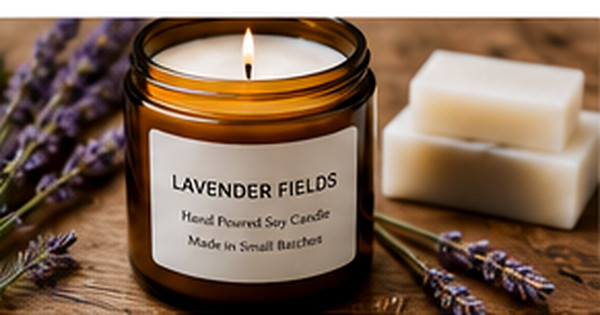
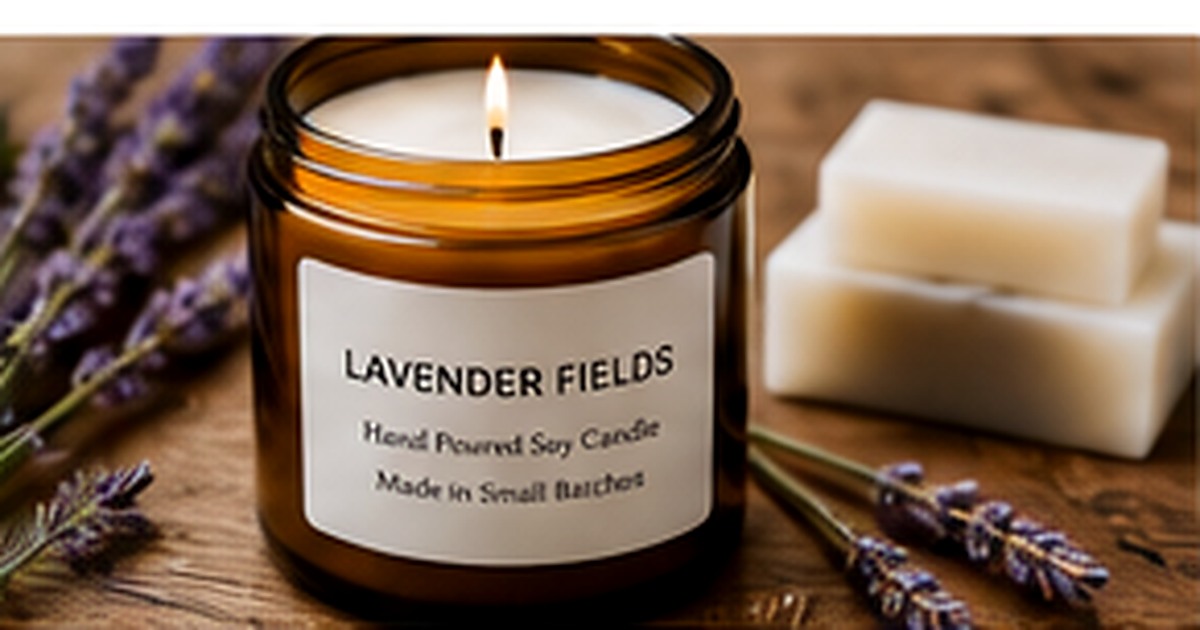
A maker might use one cream label layout for every candle, changing only the scent name and a small accent color. Soap bands use the same logo and typography but a size adapted to the bar. Batch or care information appears on a secondary panel. Product photos show a recognizable family, while customers can still identify lavender, citrus, and unscented varieties quickly. This system is easier to maintain than designing each product from scratch.
Common product-label mistakes
Avoid choosing a label material before testing it on the actual jar, tin, box, or wrap. Do not shrink warnings or required details merely to protect decorative space. Scent names should not be more prominent than the product identity when the package could be misunderstood. Makers should also remove old label versions from the packing area so outdated weights, ingredients, or contact details are not used accidentally.
Do one real-world review before finalizing
Before committing to the final approach, create one complete sample using the actual materials, names, address details, containers, or stationery involved in labels for handmade candles and soaps. View it in normal light, handle it the way a recipient or household member would, and ask another person what they notice first. This last review catches small problems with scale, wording, placement, and usability. Record the approved choices so a future reorder or update begins from a tested version rather than an old draft or memory.
Quick checklist
- Keep the front label easy to scan
- Use one repeatable layout across varieties
- Test on the actual product container
- Review applicable product-label requirements
Frequently asked questions
Can one label design work for both candles and soap?
The visual system can coordinate, but the sizes, materials, and information needs may differ. Adapt the layout to each package.
Should every scent use a different color?
It can help customers distinguish varieties, but keep the palette controlled so the collection still looks unified.
How many labels should a new maker order?
Begin with quantities that match realistic short-term production. Small runs make revisions easier while the product line develops.
Put the plan into practice
A thoughtful system is easier to use when the design and supplies support the real task. Explore custom labels to create coordinated pieces that remain clear, practical, and personal.