
Pantry Organization with Custom Labels: A Step-by-Step System
Posted by Affordable Address Labels on Jan 17th 2026
A labeled pantry can look beautiful, but appearance is not the main reason labels work. They reduce the number of decisions required to put groceries away, help family members return items to the right place, and make low supplies visible before a recipe is underway.
The most durable system starts with categories and routines, not matching containers. Labels should support how the household actually shops and cooks. A small pantry used by two adults needs a different structure than a family snack cabinet or an allergy-aware kitchen.
Empty and sort before labeling anything
Remove items shelf by shelf and group them into meaningful categories: breakfast, baking, grains, canned goods, snacks, lunch supplies, beverages, and backstock. Discard expired products and set aside unopened food that will not be used for donation where appropriate.
Notice duplicates and awkward package sizes. The goal is not to decant every ingredient. Some foods store better in their original packaging because the package includes preparation instructions, lot information, or a reliable seal. Containers should solve a storage problem, not create extra work.
Create zones based on frequency and reach
Place daily items between waist and eye level, heavier items lower, and occasional supplies higher. Children's snacks can have a clearly defined accessible zone. Backstock belongs behind or above the active supply rather than mixed into every shelf.
Label shelves or bins as well as containers when the location matters. A bin labeled “Lunchbox” communicates where multiple products belong even when brands and package sizes change. This type of category label often has more long-term value than a separate label for every temporary item.
Choose label wording that will survive product changes
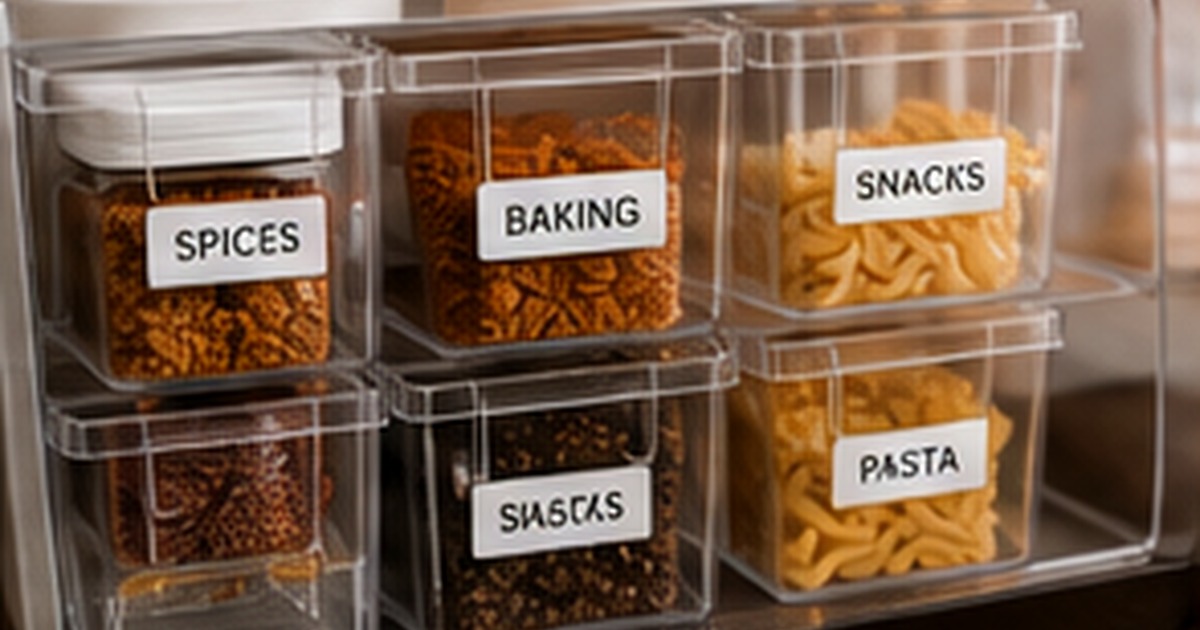
Broad but useful terms—Pasta, Baking, Snacks, Breakfast, Tea—allow flexibility. Very specific labels can create empty containers and misplaced products when shopping habits change. For ingredients transferred out of original packaging, include the common name and add a removable date label when freshness matters.
Households managing allergies may need additional visual cues. Use consistent color, a dedicated shelf, or clear “contains” and “free from” information based on the household's safety plan. Decorative labels should never replace complete ingredient and allergen information.
Plan a five-minute maintenance routine
An organization system fails when it requires a full weekend to restore. Before grocery shopping, scan each zone, move older items forward, and add low supplies to the list. When new groceries arrive, place backstock behind the active item and return reusable containers to the same labeled location.
Keep a few blank or writable labels nearby for seasonal ingredients and changing categories. Review the system after a month. If items repeatedly land outside their assigned zone, the label may be wrong for the behavior rather than the family being wrong for the label.
Test the system during an ordinary week
A labeling system should be judged when groceries are rushed, paperwork arrives, or several people use the same space. Notice where items naturally land and whether the label describes that behavior clearly. Repositioning one bin may solve more than adding five new categories.
Use temporary labels during the first few weeks, then make permanent versions only for categories that remain stable. This trial period protects the budget and prevents a polished system from locking the household into labels that looked good but did not support daily life.
Quick checklist
- Sort by real household use
- Keep daily items within easy reach
- Use category labels for changing products
- Retain safety and preparation information
- Add dates where freshness matters
- Review the system after four weeks
Frequently asked questions
Do all pantry containers need to match?
No. Matching shapes can improve stacking, but clear categories and consistent label placement matter more than identical containers.
Should I label expiration dates?
For decanted foods, record a best-by date or refill date when useful. Use removable labels so the permanent category label does not need replacement.
What is the best label size?
Choose a size readable from the normal standing distance. Small spice jars need concise labels; large bins can support larger type and a second line.
Design the pantry for the next ordinary Tuesday
A useful pantry system makes groceries easier to store and meals easier to begin. Choose clear categories, label the places that stay consistent, and allow temporary items to change. Explore personalized labels for household organization and keep matching recipe or greeting cards nearby for food gifts and family favorites.