
Labeling Tips for Teachers and Students
Posted by Affordable Address Labels on Jul 26th 2021
School supplies move constantly. Pencils travel between desks, lunch containers visit the cafeteria, jackets land on hooks, and shared classroom materials are returned to the wrong bin. Clear labels cannot prevent every lost item, but they make ownership and destination easier to recognize.
The best school-labeling plan is selective. Label the items that are valuable, frequently shared, visually similar, or likely to leave the room. A practical system should be readable by the child or student using it and manageable for the adult maintaining it.
Use the least personal information that works
For items used only inside a secure classroom, a first name and last initial may be enough. Items that travel publicly—backpacks, jackets, sports bags—should not display unnecessary personal details. Schools and families should follow local safety guidance for what appears on the outside of belongings.
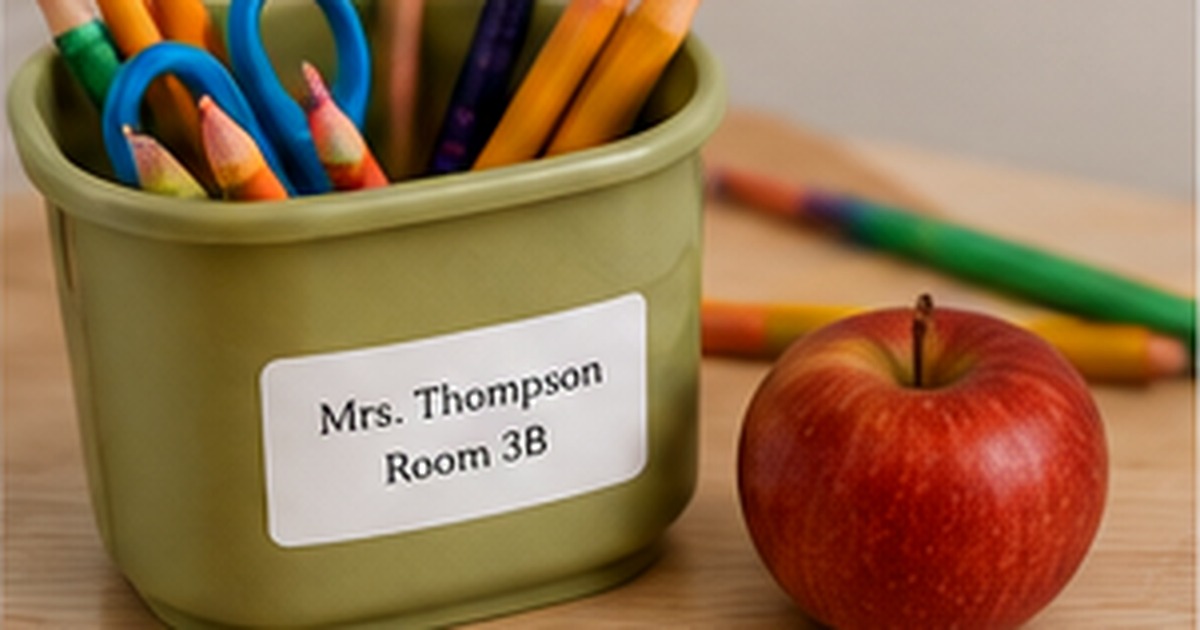
Teachers can use a classroom number, name, or subject on shared materials. A label reading “Mrs. Thompson, Room 3B” tells a finder where the item belongs without identifying a student.
Match the label to the surface and cleaning routine
Paper folders, notebooks, bins, fabric lunch bags, water bottles, and electronic chargers face different conditions. Consider moisture, abrasion, dishwashing, laundering, and repeated handling before choosing the label material or placement.
Apply labels to clean, dry, smooth areas and press the edges firmly. For items washed frequently, follow the product's care instructions and allow any recommended curing time. A decorative paper label intended for envelopes should not be assumed to perform like a durable product label.
Create visual consistency for younger students
Young children may recognize color and icons before reading every word. Repeating the same symbol or color across a lunchbox, folder, pencil case, and cubby can help them identify belongings independently.
Keep the design simple. A crowded label with several graphics and a tiny name is harder to recognize. One icon, one strong color, and clear type usually creates a faster visual cue.
Label the destination as well as the owner
Classroom organization improves when bins and shelves indicate where items return. Labels such as “Markers,” “Completed Work,” “Library Returns,” and “Math Tools” reduce questions and make cleanup more consistent.
Review categories after the first few weeks. If materials regularly collect in the wrong place, the location may be inconvenient or the category may be unclear. Effective labels describe the routine students can realistically follow.
Review the system after the first month of school
The first weeks reveal which belongings travel, which labels are difficult to read, and which classroom categories students understand. Replace labels that are damaged or too detailed and move destination labels when the storage location creates congestion.
Keep a small repair supply for new folders, replacement bottles, seasonal equipment, and midyear classroom changes. A consistent format makes additions blend into the system without requiring every existing label to be remade.
Include students in the system when appropriate
Students are more likely to follow a labeling system they understand. Explain what the categories mean, demonstrate where materials return, and let older students suggest wording when a label is confusing. A classroom label is successful when it reduces questions and supports independence, not when it simply looks organized.
For personal belongings, teach students to check labels before leaving the classroom, cafeteria, library, or activity area. A brief end-of-day routine can prevent more losses than adding labels after items have already disappeared. The visual system and the behavior should reinforce each other.
Quick checklist
- Follow school privacy guidance
- Use a classroom identifier on shared supplies
- Choose materials for the real cleaning conditions
- Repeat one icon or color for young children
- Label storage destinations
- Replace outdated grade or classroom information
Frequently asked questions
Should every pencil be labeled?
For younger students or specialty supplies, individual labels can help. For basic bulk pencils, labeling the container may be more practical.
What information belongs on a backpack?
Use only the information needed under the family’s and school’s safety plan. A discreet interior contact label may be preferable to a full public name and address.
How can teachers keep chargers organized?
Label both the device end and power adapter with the same short code, then label the storage slot or bin with that code.
Make the return path obvious
School labels work when they answer two questions quickly: whose is this, and where does it belong? Use personalized labels for suitable supplies and teacher stamps for paper-based classroom routines, always matching the product to the surface and privacy need.