
How to Reduce Waste When Ordering and Using Address Labels
Posted by Affordable Address Labels on Jul 12th 2018
Sustainable stationery choices are often less about finding one perfect material and more about avoiding waste across the entire life of the product. Ordering too many labels, choosing a short-lived design, or storing them poorly can create more waste than the label material itself.
A practical low-waste approach begins with realistic quantities and flexible design. It continues with careful storage, purposeful use, and a plan for outdated or leftover pieces.
Order from an actual mailing estimate
Count holiday cards, monthly correspondence, business shipments, and event mail instead of choosing the largest package automatically. Add a reasonable buffer for mistakes and unexpected needs, but avoid buying years of inventory when addresses, names, or preferences may change. A smaller first order also lets you confirm size and readability before committing.
Choose a design that can cross seasons
Highly specific holiday or event graphics can be useful, but they are more likely to remain unused. For an everyday supply, choose colors and motifs that work on thank-you notes, invitations, bills, and family cards. A versatile label receives more use and reduces the temptation to order separate designs for every minor occasion.
Protect the adhesive and paper during storage
Keep label sheets flat, dry, and away from direct heat. Damaged corners, curled backing, and dusty adhesive often turn otherwise usable labels into trash. Store related stationery together so labels are easy to find when needed instead of being forgotten and reordered unnecessarily.
Give leftovers a secondary job
Outdated address labels can still help with moving boxes, household files, book ownership, craft supplies, or temporary organization if privacy is not a concern. Business labels with an old design may work for internal bins or sample packages. Reuse should be sensible, but it can extend the life of a product that no longer belongs on outgoing mail.
Test the longest realistic name and address
Design previews often use short sample text. Replace it with the longest household name, street, city, or unit line you expect reduce address label waste to carry. The longest case determines whether the type can remain readable and whether the decorative element has enough space. Testing only the shortest address creates surprises when the real order is produced.
Match quantity to a defined period of use
Estimate usage for the next twelve to eighteen months rather than ordering by habit. Include known events and seasonal mail, then add a modest reserve. This protects the unit cost without creating years of inventory that may become outdated. Record the order date and remaining quantity so the next purchase of how to reduce waste when ordering and using address labels is based on evidence.
Apply samples to several envelope colors
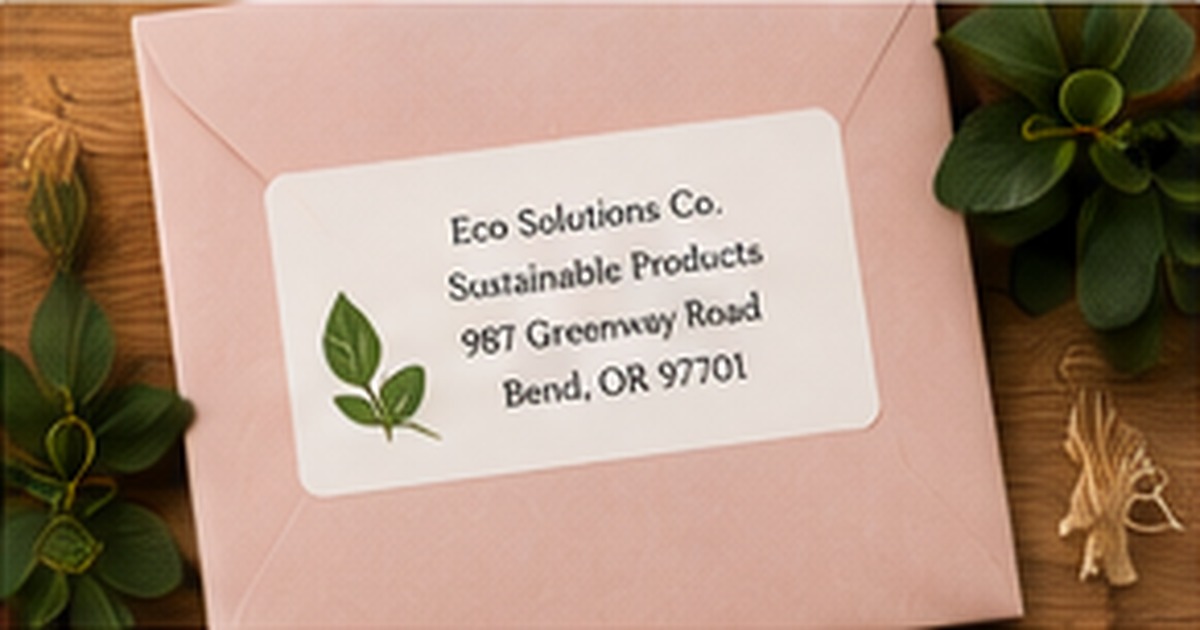
A label can change dramatically on white, kraft, navy, or patterned paper. Test the actual size on the surfaces you use most often and view it from arm’s length. Check the edges, contrast, and relationship to the envelope flap or recipient address. A versatile design should remain clear in more than one ideal setting.
Mistakes that make a good label less useful
Even a strong design for reduce address label waste can disappoint when the practical details are skipped. Avoid ordering from a sample address without testing the longest real line, shrinking type to preserve decoration, or choosing a material before checking the envelope or container surface. Do not assume the screen color will behave the same on kraft, dark, glossy, or textured paper. Check spelling and ZIP code from a reliable source, and make one full-size sample before approving quantity. Store the final proof and order details so how to reduce waste when ordering and using address labels can be reordered accurately. These small controls protect readability, reduce waste, and make the label dependable beyond the first attractive photograph.
Quick checklist
- Estimate quantity from real annual usage
- Choose a flexible everyday design
- Store sheets flat and protected
- Repurpose appropriate leftovers before discarding them
Frequently asked questions
Are paper labels always the most sustainable choice?
Material matters, but total waste, shipping, durability, and actual use also matter. Choose a product you will use fully.
Should I avoid seasonal labels completely?
No. Seasonal labels are worthwhile when the quantity matches a known mailing list and the design will be used.
Can old labels be recycled?
Recycling rules vary by local program and adhesive construction. Check local guidance rather than assuming every backing sheet is accepted.
Make the next mailing easier
A clear system turns the next envelope, package, or note into a repeatable task rather than a new design problem. Explore personalized address labels to coordinate the practical details with a polished finished look.