
How to Protect Labels and Stamps from Heat, Humidity, and Dust
Posted by Affordable Address Labels on Jun 17th 2024
Address labels and stamps are small supplies, but poor storage can shorten their useful life. Heat can affect adhesive and ink, humidity can curl paper, sunlight can fade printed colors, and dust can settle into stamp mechanisms or rubber details.
A stable indoor location and simple protective containers solve most problems. The goal is not museum-level preservation; it is keeping the supplies flat, clean, and ready when you need them.
Choose a stable indoor location
Avoid attics, garages, cars, sheds, and window ledges where temperatures and humidity change dramatically. A closet shelf, desk drawer, cabinet, or interior storage box provides a more stable environment.
Keep supplies away from radiators, heating vents, and direct sun. Even sealed packages can warm enough to soften adhesive or dry stamp pads over time.
Store label sheets flat and covered
Keep label sheets in their original packaging, a file folder, or a rigid envelope. Flat storage prevents curled corners and protects the release liner. Do not place heavy objects on top if they could crease or pressure-sensitive labels.
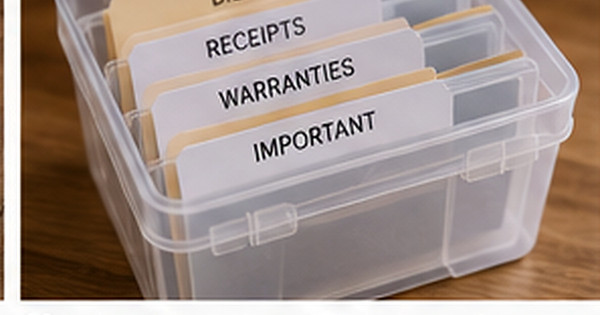
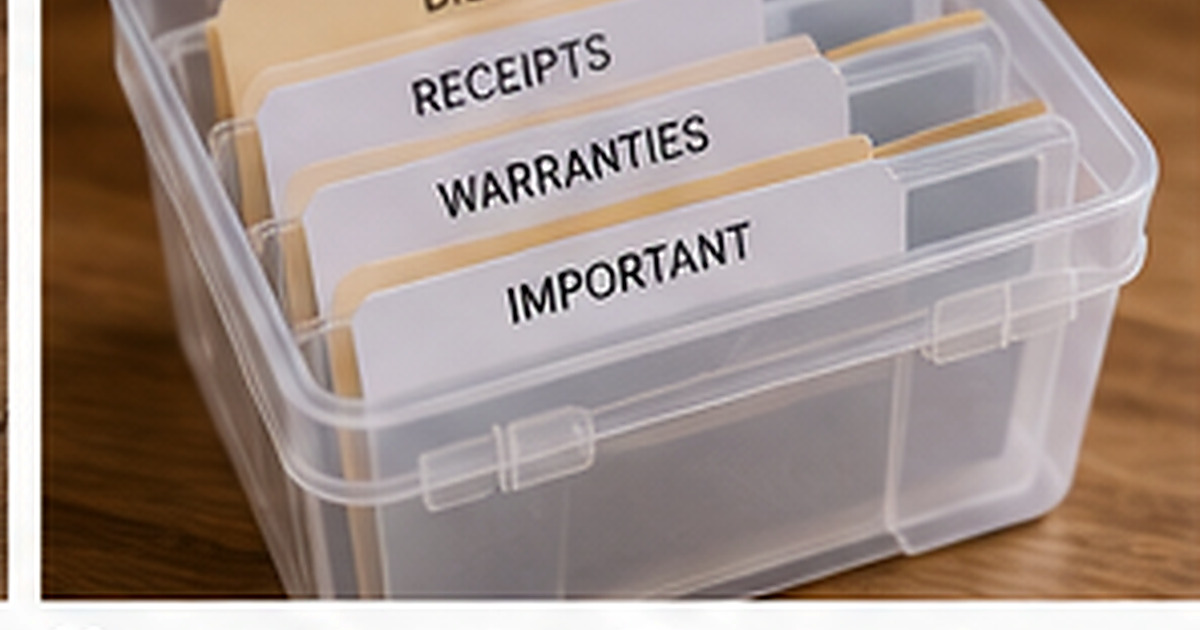
Separate designs with labeled dividers and write the reorder information on the folder. Avoid touching the adhesive edges while sorting, since skin oils and dust can reduce adhesion.
Protect self-inking and traditional stamps
Store self-inking stamps in the closed position on a level surface. Keep the cap or cover on pre-inked models when provided. Traditional rubber stamps should be cleaned after use and stored away from direct light.
Use only the ink recommended for the stamp type. Solvent-based specialty inks can damage materials not designed for them, and excess re-inking can leak into the mechanism.
Manage dust and humidity
A lidded plastic or archival box protects supplies from dust. In a naturally humid room, a small reusable desiccant packet can help, but it should not touch printed surfaces or create an overly dry environment for rubber components.
Inspect supplies at the beginning of holiday or event season. Test one label and one stamp impression before addressing a large batch of envelopes.
Storage conditions to avoid
- Direct sunlight
- Hot vehicles
- Damp basements
- Unconditioned garages or attics
- Open containers near dust
- Heavy pressure on label sheets
- Unapproved stamp inks
Start small, observe the routine, and then expand
Apply the how to store address labels and stamps to one high-friction area first. Watch how people actually use the space for a week or two. The most useful labels support an existing routine or make the next action obvious; they do not require everyone to remember a complicated new system.
Use plain language that household members, students, or coworkers naturally use. If everyone says “snacks,” a label that says “individual shelf-stable refreshments” will not improve organization. Short, familiar words are easier to scan and easier to maintain.
Plan for change. Removable labels, blank replacements, and a record of the chosen style make it easier to revise categories without abandoning the entire system. A practical organization project should become easier over time, not more rigid.
Common mistakes to avoid
- Labeling every object instead of the confusing ones
- Choosing decorative wording that users do not recognize
- Ignoring moisture, washing, or surface texture
- Creating categories that are too narrow
- Failing to remove outdated labels
A careful proof and a small real-world test prevent most of these problems. Make the design attractive, but let accuracy, readability, and ease of use guide the final decision.
Frequently asked questions
Can address labels expire?
They do not have a simple expiration date, but adhesive and paper can deteriorate under heat, humidity, and long storage.
Should self-inking stamps be stored upright?
Follow the manufacturer’s guidance. A level, closed position is generally safe and helps prevent uneven ink movement.
Can labels be refrigerated to preserve adhesive?
No. Condensation and temperature changes can damage paper and adhesive. Stable room-temperature storage is better.
How often should stamps be tested?
Test before a large mailing and whenever the stamp has been stored for an extended period.
Build a stationery system that fits real life
The best personalized paper goods are the ones you reach for often. Choose clear, accurate designs, store them where correspondence happens, and reorder before a holiday or event creates a rush. Explore personalized address labels, rubber stamps, and greeting cards to create a practical set for home, celebrations, or business mail.