
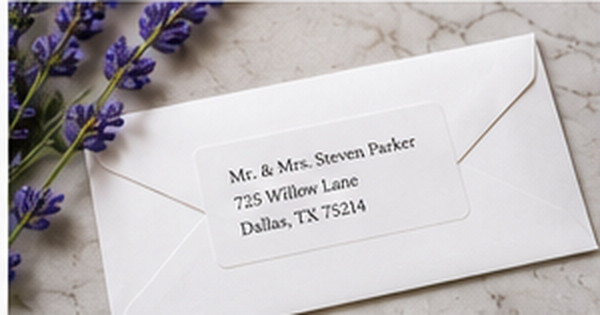
How to Address Save-the-Date Cards Without Guest-List Confusion
Posted by Affordable Address Labels on Jan 12th 2020
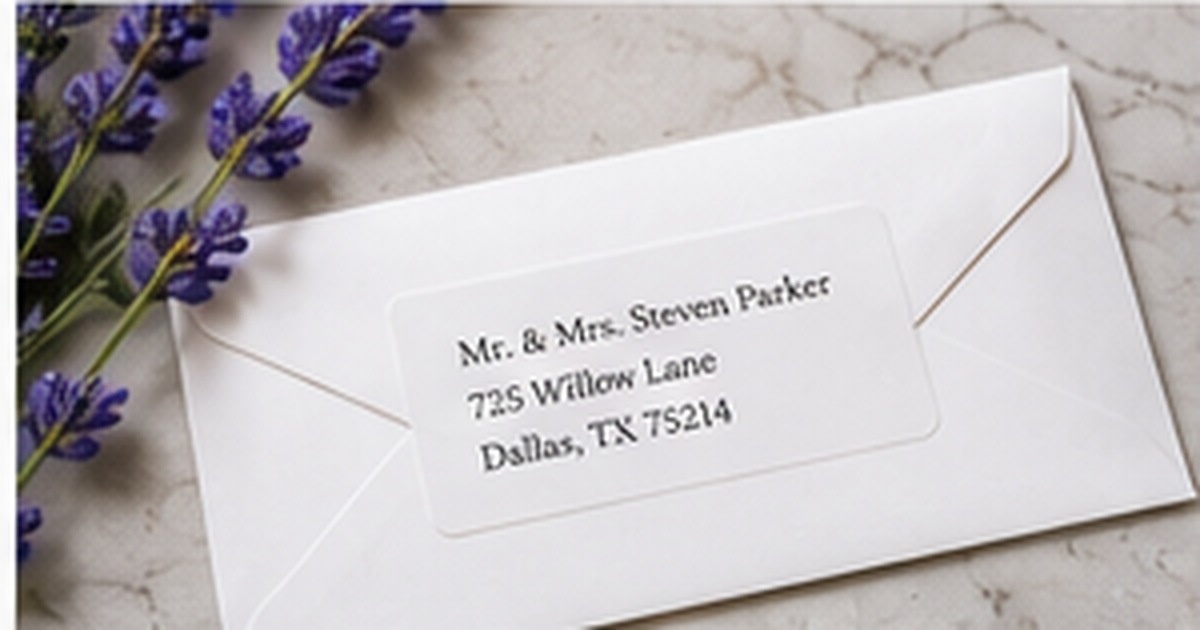
Save-the-date cards appear simple, but the envelope often communicates more than the date itself. The way a household is addressed can signal whether a partner, children, or an entire family is included. Vague wording creates questions that may continue until the formal invitation arrives.
Clear addressing begins with a guest list that records invitation scope, preferred names, mailing details, and relationship status. The envelope should reflect those decisions consistently without trying to solve every etiquette question in a tiny line of type.
Decide who is invited before formatting the envelope
Do not use addressing as a substitute for a guest-list decision. Confirm whether the invitation includes one person, a named couple, a household with children, or a guest whose companion is not yet known. Record that scope in the list before labels or handwriting begin.
When both names are known, naming both people is clearer than adding “and guest.” If children are included, a family-level address can be appropriate for the save-the-date, provided the formal invitation later makes individual inclusion clear according to the event’s style.
Use names people actually recognize
Formal titles are optional for many modern save-the-dates. A clean first-and-last-name format can feel warm and contemporary while still being respectful. Use professional, military, or honorific titles when they matter to the recipient or the overall formality of the wedding.
Confirm surnames rather than assuming married partners share one. Hyphenation, spacing, middle initials, suffixes, and preferred first names should come from the couple or household whenever possible. Correct naming shows more care than rigid adherence to an outdated formula.
Build an addressing spreadsheet that prevents rework
Separate fields for first name, last name, household line, street, unit, city, state, ZIP, invitation scope, and status make sorting and proofing easier. Avoid storing an entire address in one cell if the list will be used for labels, invitations, replies, and thank-you notes.
Mark addresses as confirmed, needs follow-up, mailed, returned, or corrected. This status system prevents the same uncertain address from being used repeatedly and creates a cleaner foundation for the formal invitation mailing.
Proof one complete envelope before producing the set
Print or write a sample using the longest household line and the longest address. Place the return address where it will appear, add the correct postage, and review the complete envelope at normal distance. This reveals cramped lines and unexpected wrapping.
Ask a person who did not build the guest list to compare a group of finished envelopes with the source file. Fresh eyes are more likely to catch transposed numbers, missing apartment details, and inconsistent household naming.
Run a guest-list audit before the envelopes are sealed
Sort the list by household and look for the situations most likely to create confusion: couples with different surnames, adult children living at home, recently engaged partners, roommates, and recipients whose guest is not yet known. Review those records one by one instead of relying on a single formula for every envelope.
After addressing, compare the envelope count with the number of household records, not the number of individual guests. Then select ten envelopes at random and verify them against the source list. This audit catches duplicated households, omitted partners, and accidental invitations before postage is applied and before guests begin making plans based on incomplete information.
Quick checklist
- Confirm invitation scope before addressing
- Use verified preferred names
- Record address components in separate fields
- Track unconfirmed and returned mail
- Test the longest name and address
- Proof a sample with return address and postage
Frequently asked questions
Should save-the-dates include “and guest”?
Use it only when the recipient is genuinely being offered an unnamed guest. When a partner is known, naming that person is more personal and clear.
Can one save-the-date be sent to an entire family?
Yes, when the whole household is invited. The formal invitation should later make the included names or family scope unambiguous.
Where should the return address go?
The back flap is common for wedding mail, while the upper-left front remains the most conventional postal location. Choose one consistent placement and test it with your envelope design.
Let the envelope clarify the invitation
A save-the-date should create anticipation, not uncertainty. Make guest decisions first, verify names and addresses, and proof a complete envelope before mailing. Coordinate return address labels with wedding stationery and greeting cards for a consistent first impression.