
How Businesses Benefit from Self-Inking Stamps in Daily Operations
Posted by Affordable Address Labels on Mar 16th 2019
Self-inking stamps are simple tools, yet they remove dozens of repetitive writing and labeling tasks from a business day. They are especially useful when the same address, approval line, status, or short instruction appears again and again.
The strongest business use cases are repeatable, standardized, and easy for employees to understand without additional explanation. The following steps focus on real use, clear communication, and a result that can be maintained instead of looking good only on the day it is created.
Speed up outgoing mail and paperwork
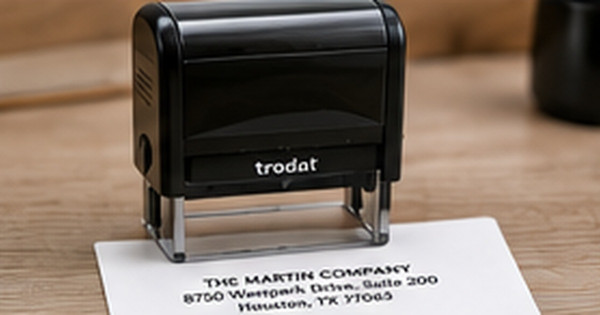
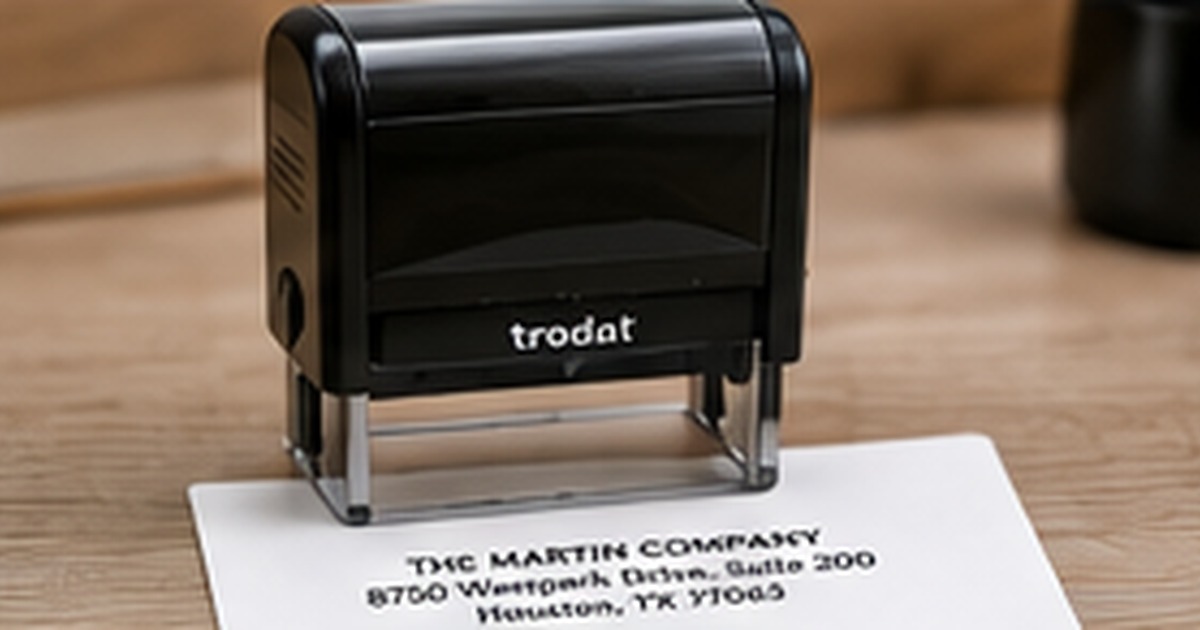
Use an address stamp on envelopes, invoices, return forms, and internal routing slips. This is the foundation of this part of the system because it keeps the purpose clear before design or quantity decisions are made. Next, place the stamp at a consistent location so documents remain easy to scan. Next, keep the impression concise and readable. Next, measure the available space before ordering a large stamp. This approach works because it makes the next action obvious and removes the need to reinterpret the system each time.
Standardize common office language
A useful starting point is to create stamps for received dates, paid status, approvals, deposits, copies, and other repeated actions. That choice creates a clear rule that can be repeated across the entire project. Next, choose wording that matches the company process exactly. Next, avoid creating several stamps that mean almost the same thing. Next, train staff on when each impression should be used. Before ordering or applying the full quantity, test one real example under the same conditions in which it will be used.
Improve consistency across employees
The most dependable method is to a shared stamp prevents variations in handwriting and abbreviations. It reduces exceptions and makes the finished result easier to understand at a glance. Next, store high-use stamps at the point of work rather than in a central cabinet. Next, use different housing colors or labels to identify similar tools. Next, assign one person to review replacement text before reordering. Consistency matters more than complexity: a modest system followed every time is more useful than an elaborate one that people avoid.
Choose the right impression size and ink
Begin by planning to prioritize legibility over adding extra lines. Once that decision is settled, the remaining design and organization choices become much easier. Next, select dark ink for operational documents and a brand color only when contrast remains strong. Next, test the stamp on the actual paper stock. Next, allow drying time on glossy or coated surfaces. The final check should be practical rather than purely visual, including readability, placement, durability, and ease of replacement.
Maintain stamps as business equipment
For this step, it helps to keep caps and mechanisms clean. The goal is a repeatable result, not a one-time arrangement that is difficult to maintain. Next, replace or re-ink pads before impressions become faint. Next, store stamps upright in a dry location. Next, record the wording and size so replacements match existing office systems. Document the decision in a saved proof, sample, or short note so future reorders and updates do not start from zero.
Quick checklist
- Use an address stamp on envelopes, invoices, return forms, and internal routing slips
- Create stamps for received dates, paid status, approvals, deposits, copies, and other repeated actions
- A shared stamp prevents variations in handwriting and abbreviations
- Prioritize legibility over adding extra lines
- Keep caps and mechanisms clean
Frequently asked questions
Are self-inking stamps suitable for high-volume use?
Yes. They are designed for repeated impressions and are convenient for routine office tasks.
Can a business stamp include a logo?
Many designs can include a simplified logo, but fine detail should be tested at the final impression size.
How often does the ink pad need replacement?
It depends on use and storage. Replace or re-ink when impressions become uneven, faint, or slow to recover.
Put the plan into practice
A clear system makes the project easier to complete and easier to repeat. Review one full-size sample, correct any wording or spacing issues, and keep the final details for future use. Explore address stamps to coordinate the practical pieces with the look you want.
A practical review before you finish
Set the completed piece beside the materials it will actually accompany and review it from the recipient’s point of view. Confirm that the main information is visible immediately, that decorative details do not interfere with reading, and that the design still works on the smallest or darkest item in the project. Check spelling, addresses, dates, and quantities against the source list rather than memory. Finally, prepare one complete sample from beginning to end. That sample often reveals placement, handling, or storage issues that are not obvious on a screen and gives everyone involved a reliable model to follow.