
Holiday Card Addressing Timeline: A Week-by-Week Plan
Posted by Affordable Address Labels on Sep 6th 2024
Holiday cards become stressful when every task lands in the same weekend. The mailing list needs updates, cards need to be ordered, family photos need approval, addresses need checking, and envelopes still need signatures and postage. A short timeline spreads the work across several weeks.
The exact dates depend on your holiday and destination, but the sequence remains useful: update the list first, order printed pieces early, address in batches, and leave room for returned mail or late additions.
Six to eight weeks before mailing: update the list
Start with last year’s spreadsheet, address book, or returned envelopes. Mark moves, marriages, new babies, household changes, and people you no longer plan to include. Send a quick address-confirmation message to anyone whose information is uncertain.
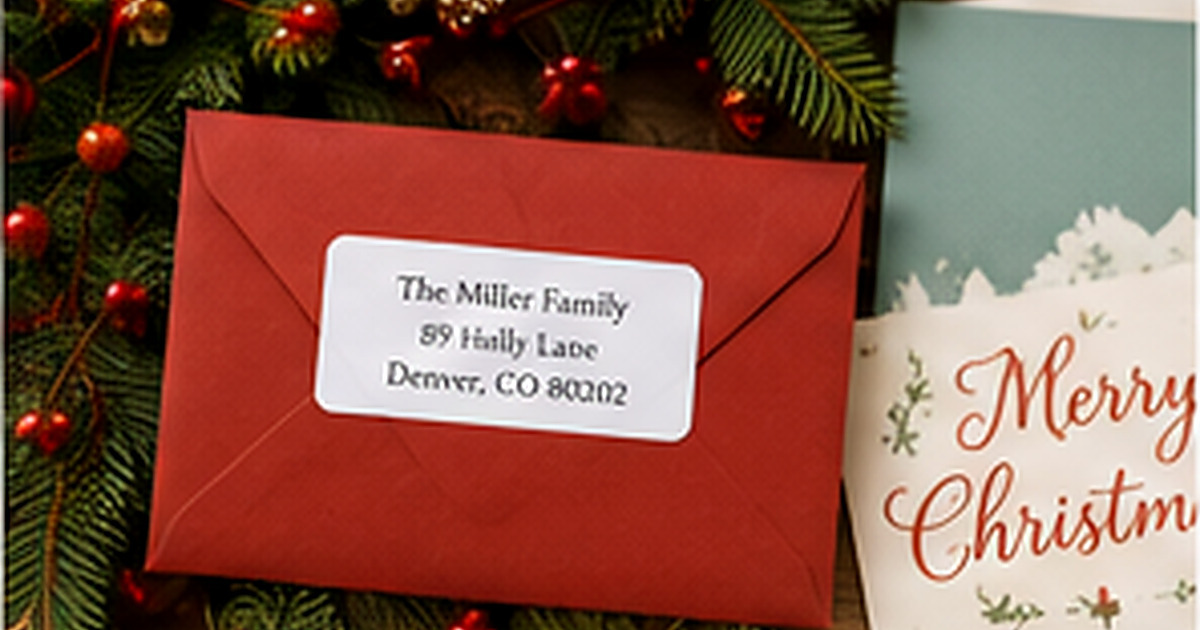
This is also the time to decide whether the card is personal, business, religious, general seasonal, or a mixture. That choice affects the wording, quantity, and design of the return address labels.
Four to six weeks before mailing: order the pieces
Choose cards, envelopes, return address labels, and any coordinating seals. Order enough for the confirmed list plus a small buffer. If a family photo is involved, review names and the year carefully; these are the details most likely to survive unnoticed until the box arrives.
Buy postage after you know the finished card’s size, thickness, and weight. Square cards, rigid embellishments, and unusually thick envelopes may need additional postage.
Two to four weeks before mailing: assemble in batches
Divide the list into manageable groups of ten or twenty. Apply return labels, write recipient addresses, add personal notes, and place postage in separate sessions. Batching keeps the process moving without turning it into an all-day project.
Use a completion column in the mailing list for addressed, signed, sealed, and mailed. The extra tracking may feel formal, but it prevents duplicates and forgotten envelopes when several family members help.
Final week: mail and manage exceptions
Mail earlier for international or military addresses and for destinations affected by severe winter weather. Keep a few blank cards and labels available for neighbors, coworkers, or late-arriving greetings that prompt a response.
When mail is returned, update the list immediately instead of placing the envelope in a pile. Add the corrected address or a note to confirm it before next year.
Holiday mailing supplies to gather early
- Updated address list
- Cards and envelopes
- Return address labels
- Postage in the correct denomination
- Quick-drying pens
- Envelope seals if desired
- A tracking checklist
Create one complete sample before the full mailing
Assemble one finished piece with the card, envelope, holiday card addressing timeline, inserts, seal, and postage. Looking at the complete mailing reveals proportion and contrast problems that are easy to miss when each element is reviewed separately. It also shows whether the envelope closes securely and whether the finished weight changes the postage requirement.
Ask someone who was not involved in the design to read the names, address, date, and response details. Fresh eyes catch transposed numbers, unclear abbreviations, and decorative type that the creator has learned to recognize. Make corrections before applying labels or stamps to the entire quantity.
Keep the approved sample with the mailing list until the project is complete. It becomes the reference for helpers and provides a quick way to confirm that late additions match the original batch.
Common mistakes to avoid
- Approving only an enlarged on-screen proof
- Forgetting to weigh a fully assembled envelope
- Using pale ink on a colored envelope
- Ordering the exact guest count with no extras
- Waiting until the mailing week to confirm addresses
A careful proof and a small real-world test prevent most of these problems. Make the design attractive, but let accuracy, readability, and ease of use guide the final decision.
Frequently asked questions
When should holiday cards be mailed?
Mailing windows vary by holiday, destination, and postal conditions. Build in extra time for international mail and avoid relying on the final suggested date.
How many extra cards should I order?
A buffer of five to fifteen percent usually covers late additions, writing mistakes, and damaged cards.
Should I handwrite recipient addresses?
Handwriting adds warmth, but printed addressing is practical for large lists. Use whichever method helps you send accurate, readable mail.
How can I avoid duplicate cards?
Track each household in one list and mark the card mailed only after it is sealed and ready to leave the house.
Build a stationery system that fits real life
The best personalized paper goods are the ones you reach for often. Choose clear, accurate designs, store them where correspondence happens, and reorder before a holiday or event creates a rush. Explore personalized address labels, rubber stamps, and greeting cards to create a practical set for home, celebrations, or business mail.