
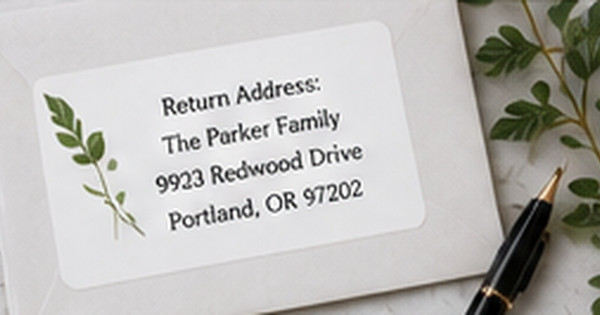
Five Mailing Tasks Where Return Address Labels Beat Handwriting
Posted by Affordable Address Labels on Nov 14th 2022
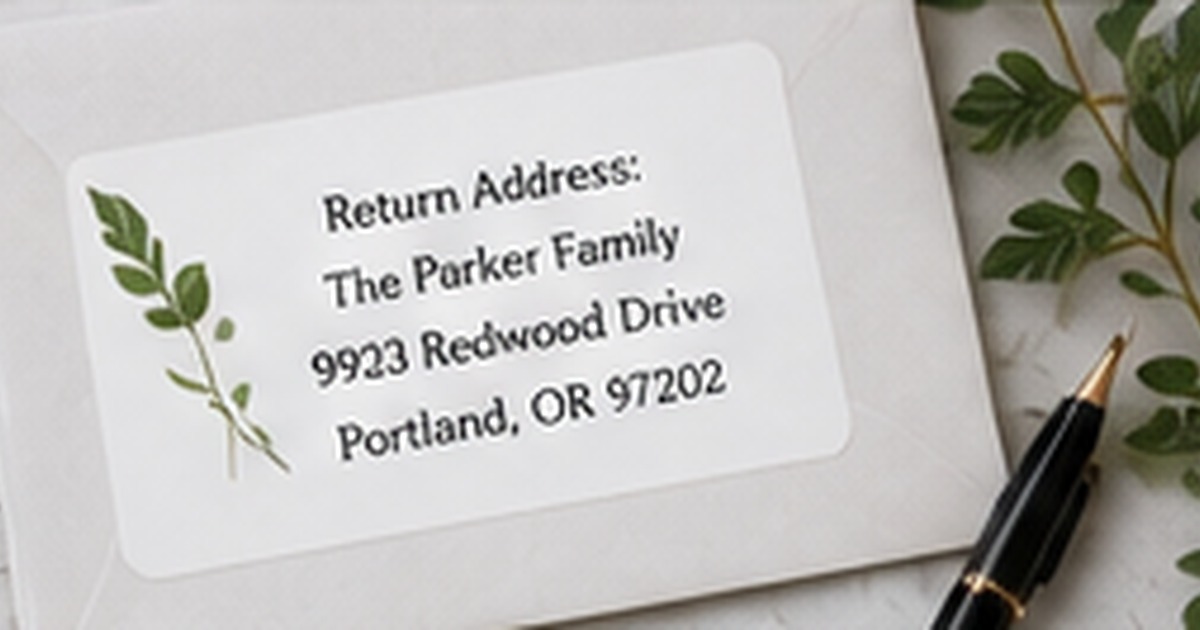
Handwriting is personal, but it is not always the best tool for repetitive return information. Labels are especially useful when consistency, speed, or limited writing space matters more than the character of a handwritten line.
The recipient address or message can still be handwritten. A return label simply handles the fixed information so the sender can spend time on the part of the mail that changes.
Holiday card batches
Dozens of envelopes create fatigue, and fatigue creates spelling and ZIP-code errors. Applying the same verified return label to every piece removes one repetitive step and makes the stack look coordinated even when recipient addresses are handwritten.
Event invitations and thank-you notes
Weddings, showers, graduations, and family events often generate several rounds of mail. A label keeps the host or household return information consistent across invitations, RSVP envelopes, and follow-up notes. It also helps when multiple people are assembling the stationery.
Small-business shipments and customer cards
Businesses benefit from a repeatable identity and clear return information. Labels can standardize outgoing packages, inserts, and handwritten thank-you cards without requiring custom-printed envelopes for every use.
Moving, school, and administrative mail
Address changes, school forms, medical documents, and official correspondence need accuracy. A proofed label reduces rushed handwriting and can make a new or complicated address easier to reproduce. It is especially helpful when apartment, unit, or directional information is frequently omitted.
Choose the label shape after the text
Shape should serve the real address rather than forcing the wording into a decorative outline. Rectangles handle long lines well, while squares and ovals favor shorter text and stronger visual motifs. For benefits of return address labels, compare options using the actual names and address before selecting the shape.
Plan a primary and secondary use
An everyday label may also support thank-you notes, invitations, school mail, or packages. Define the primary job and one realistic secondary use. This keeps five mailing tasks where return address labels beat handwriting versatile without making it generic. A design trying to fit every possible occasion often loses the personality that made it appealing.
Review the first twenty uses
After the label has been used on several envelope sizes and colors, note any repeated problem: small type, awkward placement, weak contrast, or too little room. Save those observations with the proof. The next reorder is an opportunity to refine the design rather than automatically duplicating it.
Mistakes that make a good label less useful
Even a strong design for benefits of return address labels can disappoint when the practical details are skipped. Avoid ordering from a sample address without testing the longest real line, shrinking type to preserve decoration, or choosing a material before checking the envelope or container surface. Do not assume the screen color will behave the same on kraft, dark, glossy, or textured paper. Check spelling and ZIP code from a reliable source, and make one full-size sample before approving quantity. Store the final proof and order details so five mailing tasks where return address labels beat handwriting can be reordered accurately. These small controls protect readability, reduce waste, and make the label dependable beyond the first attractive photograph.
Quick checklist
- Use labels for repeated fixed information
- Keep handwriting for personal notes and changing details
- Proof the label once before a large mailing
- Store labels with envelopes and stamps
Frequently asked questions
Do labels make mail feel impersonal?
Not when the message or recipient address remains personal. The label handles only the practical return information.
Are labels acceptable on formal mail?
Yes, particularly for the return address when the design is restrained and readable.
When is handwriting better?
Handwriting may be preferable for one special piece, decorative calligraphy, or an envelope where the return address itself is part of the personal experience.
Make the next mailing easier
A clear system turns the next envelope, package, or note into a repeatable task rather than a new design problem. Explore personalized address labels to coordinate the practical details with a polished finished look.