
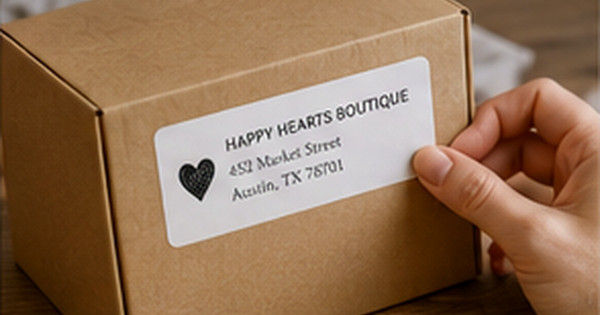
Custom Return Address Labels for E-Commerce Businesses
Posted by Affordable Address Labels on Dec 7th 2019
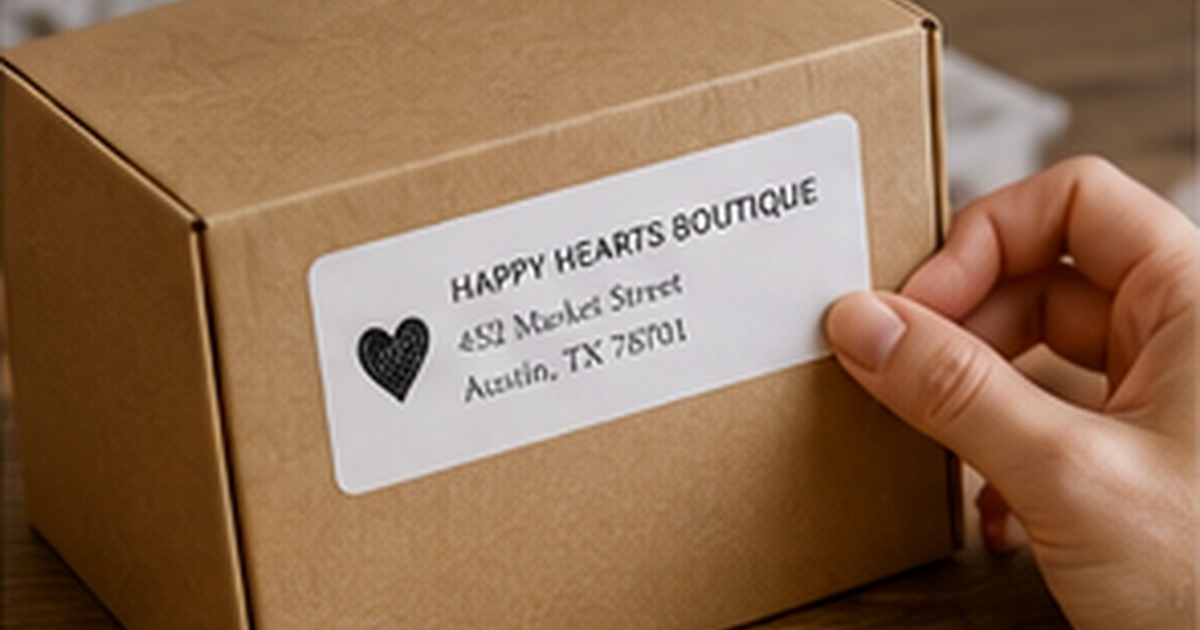
For a small e-commerce business, the return address is both operational information and a repeated brand touchpoint. It appears on boxes, envelopes, thank-you cards, replacement shipments, and customer-service correspondence. A clear custom label can save packing time while making those materials feel connected.
The label should be designed for the shipping workflow first. Brand color and personality are useful, but the business name, return address, and any required department detail must remain accurate and easy to identify.
Decide what the return address needs to accomplish
Some businesses need only a name and postal address. Others should add a returns department, order-reference instruction, website, or compact logo. Do not crowd a small label with social handles, slogans, phone numbers, and promotional language unless each element serves the package.
Consider privacy and continuity. A home-based seller may prefer a commercial mailbox or other approved business receiving address. The address should be monitored consistently so returns and undeliverable packages do not sit unattended.
Design for the surfaces used most often
Measure the clear space on the smallest mailer before selecting a label size. A design that fits a large box may cover seams or barcodes on a padded envelope. If multiple package sizes are common, a compact general-purpose label may be more efficient than separate designs.
Kraft boxes, white poly mailers, colored tissue, and glossy envelopes all affect visibility and adhesion. High contrast and a simple rectangular shape are reliable. Test labels after packages have been chilled, warmed, stacked, and handled to see whether corners lift.
Connect the label to the rest of the unboxing experience
Repeat one or two brand elements rather than every element. The label may use the logo and primary typeface, while a thank-you card carries the full color palette and message. This prevents the package from feeling visually overloaded.
Consistency also includes wording. Use the same business name format on the storefront, packing slip, card, and return label. Small discrepancies—such as an old DBA name or former suite number—can confuse customers and complicate returns.
Build labels into the packing station
Store labels within reach of the scale and tape dispenser, and train packers to apply them at the same step. Count usage for a typical week so reorders happen before the last sheet is opened. If the business changes addresses, quarantine old stock immediately.
Keep a dated proof file with the approved address and design. When a new batch arrives, compare the first sheet to the proof before adding it to production. This simple receiving check can catch unexpected artwork or address errors early.
Document the approved version and owner
Save the final artwork, exact wording, order date, vendor details, and reorder number in a shared business record. Assign one person or role to approve address changes and remove obsolete supplies so different versions do not circulate at the same time.
Review the item inside the real workflow after several weeks. Ask the people packing orders or preparing mail whether the size, placement, and storage location save time. Operational feedback is more valuable than judging the design only from a desk proof.
Measure the operational result after launch
Track how long labels last, how often packers need a replacement sheet, and whether returned packages reach the correct destination. Customer-service notes can reveal problems that are not visible at the packing table, such as a business name that recipients do not recognize or an address line that is too small.
Use those observations for the next reorder rather than automatically repeating the first design. A slightly larger type size, different roll or sheet format, or simpler logo may save more labor than a cosmetic redesign. Packaging improvements should be judged by accuracy and throughput as well as appearance.
Quick checklist
- Confirm the legal or customer-facing business name
- Use a monitored return address
- Measure the smallest package
- Test adhesion on every mailer material
- Repeat only key brand elements
- Remove old labels immediately after an address change
Frequently asked questions
Should a return label include a website?
It can, if there is room after the required address remains clear. The shipping label and insert may already provide stronger website visibility.
Can one design work on boxes and envelopes?
Often yes, when the size is compact and contrast is strong. Test it on the smallest and darkest surface before committing to a large quantity.
Do custom labels replace carrier shipping labels?
No. They provide the business return identity or branding; carrier labels contain routing, postage, tracking, and barcode information.
Turn a required detail into a reliable brand touchpoint
A custom return label should make packing faster, returns clearer, and every outgoing package more consistent. Coordinate business address labels with a reusable business stamp and purposeful thank-you cards for a shipping system that feels professional at any order volume.