

Closing Out the Year with Meaningful Holiday Mail
Posted by Affordable Address Labels on Jan 9th 2026
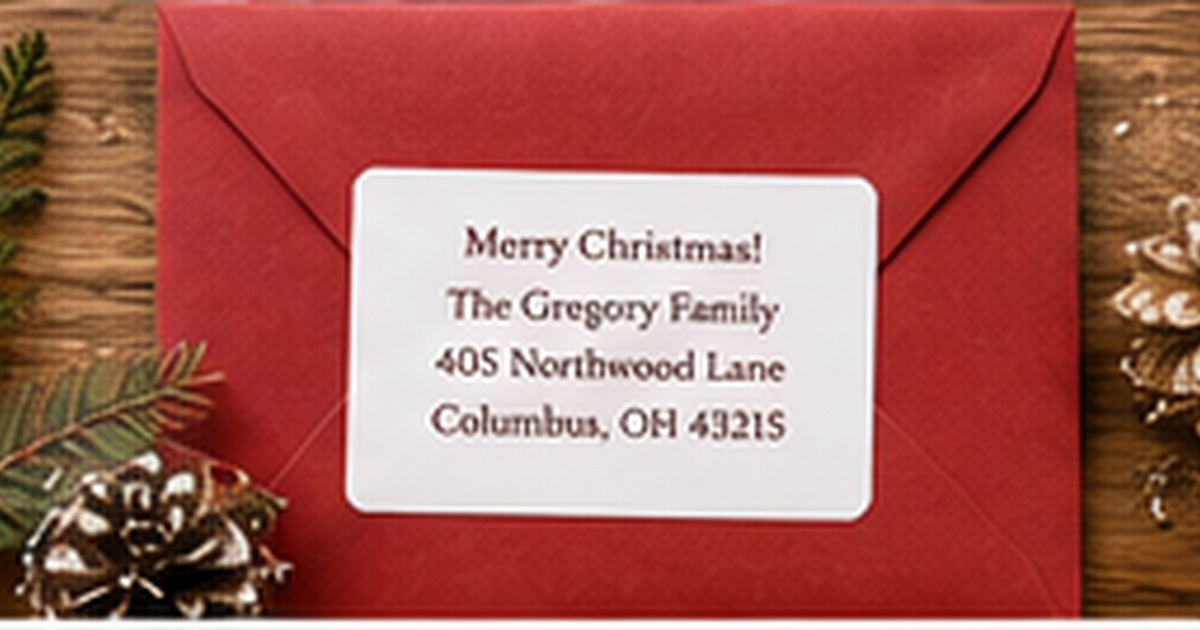
Year-end mail offers a chance to pause, acknowledge relationships, and share something more lasting than a social-media update. The most meaningful cards combine a manageable mailing list, a sincere message, and a presentation that feels like the sender.
Focus on the people and words first, then use coordinated stationery and a simple process to make the tradition sustainable every year. The following steps focus on real use, clear communication, and a result that can be maintained instead of looking good only on the day it is created.
Define the purpose of the mailing
Decide whether the card is a seasonal greeting, gratitude note, family update, or New Year message. This is the foundation of this part of the system because it keeps the purpose clear before design or quantity decisions are made. Next, let that purpose guide the wording and design. Next, avoid including information simply because it appeared in previous years. Next, choose a tone that feels honest for the year that ended. This approach works because it makes the next action obvious and removes the need to reinterpret the system each time.
Build a thoughtful recipient list
A useful starting point is to include people with whom the household wants to maintain a real connection. That choice creates a clear rule that can be repeated across the entire project. Next, update moves and name changes. Next, separate personal, professional, and community lists when the messages differ. Next, avoid treating the list only as a measure of quantity. Before ordering or applying the full quantity, test one real example under the same conditions in which it will be used.
Write a message with substance
The most dependable method is to share one meaningful highlight, lesson, or expression of gratitude. It reduces exceptions and makes the finished result easier to understand at a glance. Next, acknowledge difficult years with appropriate honesty. Next, keep family updates concise. Next, add handwritten lines to close relationships when time allows. Consistency matters more than complexity: a modest system followed every time is more useful than an elaborate one that people avoid.
Create a coordinated but efficient mailing system
Begin by planning to choose cards, envelopes, labels, and postage that work together. Once that decision is settled, the remaining design and organization choices become much easier. Next, apply return labels and postage in batches. Next, proof every address before sealing. Next, keep extra cards available for late additions. The final check should be practical rather than purely visual, including readability, placement, durability, and ease of replacement.
Preserve the tradition for next year
For this step, it helps to save the current address list and final wording. The goal is a repeatable result, not a one-time arrangement that is difficult to maintain. Next, note returned mail and corrections. Next, store leftover stationery flat. Next, record the quantity used so the next order is more accurate. Document the decision in a saved proof, sample, or short note so future reorders and updates do not start from zero.
Quick checklist
- Decide whether the card is a seasonal greeting, gratitude note, family update, or New Year message
- Include people with whom the household wants to maintain a real connection
- Share one meaningful highlight, lesson, or expression of gratitude
- Choose cards, envelopes, labels, and postage that work together
- Save the current address list and final wording
Frequently asked questions
Is January too late for holiday mail?
No. A New Year greeting or year-end reflection can be sent in January and may receive more attention after the holiday rush.
Should every card include a family letter?
No. A shorter personal message is often more meaningful than a long general update.
How can holiday mail feel less overwhelming?
Reduce the list to meaningful connections and divide writing, labeling, and mailing into separate sessions.
Put the plan into practice
A clear system makes the project easier to complete and easier to repeat. Review one full-size sample, correct any wording or spacing issues, and keep the final details for future use. Explore greeting cards and personalized address labels to coordinate the practical pieces with the look you want.
A practical review before you finish
Set the completed piece beside the materials it will actually accompany and review it from the recipient’s point of view. Confirm that the main information is visible immediately, that decorative details do not interfere with reading, and that the design still works on the smallest or darkest item in the project. Check spelling, addresses, dates, and quantities against the source list rather than memory. Finally, prepare one complete sample from beginning to end. That sample often reveals placement, handling, or storage issues that are not obvious on a screen and gives everyone involved a reliable model to follow.