
Candle Warning, Scent, and Shipping Labels: A Small-Batch Workflow
Posted by Affordable Address Labels on Jun 21st 2021
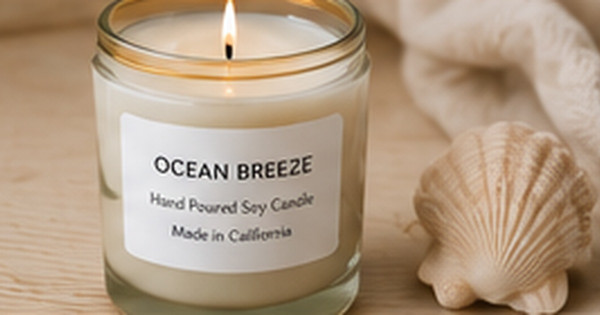
A candle business may use several labels on one product: a scent label, warning label, batch identifier, shipping label, and occasional gift or thank-you seal. Problems appear when those pieces are designed separately without a production workflow.
A clear system helps the maker label the right jar, preserve traceability, pack efficiently, and maintain a consistent customer experience as scent collections expand.
Separate required information from brand storytelling
Safety and product information need clear space and consistent placement. Brand language, scent description, and decorative art can live on a front label or package insert. Separating those roles keeps small text readable and prevents the most important information from competing with a poetic scent name.
Create a naming system for scents and batches
Use predictable internal codes or labels for fragrance, vessel size, pour date, and batch. The customer may never see every code, but the system supports inventory checks and quality follow-up. Keep internal labeling visually distinct from customer-facing branding so packing staff can identify it quickly.
Test labels against heat, oil, and handling
Candle containers may encounter warm surfaces, fragrance residue, and repeated handling. Apply samples to the actual vessel and observe edges, readability, and adhesive performance. A beautiful label that lifts at the corner or shows oil marks will weaken the product presentation.
Build the labeling sequence into packing
Decide when each label is applied: after cure, during inventory, or at final shipment. Group labels by scent and size, and keep a second check before the box is sealed. A defined sequence reduces mismatched lids, wrong scent labels, and incomplete warning information.
Separate permanent branding from changing information
Business name, core colors, and a recognizable mark may remain stable, while scents, dates, recipient details, and campaigns change often. Build candle business labels so permanent elements can be ordered efficiently and variable elements can be updated without discarding the entire system. This approach protects consistency and makes seasonal changes less expensive.
Proof at the speed of the packing table
A label can be attractive but frustrating if it is difficult to peel, orient, or apply. Time a realistic packing session and note where the process slows down. For candle warning, scent, and shipping labels: a small-batch workflow, test whether the design has an obvious top, whether placement guides are needed, and whether the label can be applied cleanly with ordinary hand positioning. Small production details influence the customer result.
Use inventory levels that match business risk
Large orders reduce unit cost but increase the risk of obsolete addresses, designs, or regulatory information. Estimate monthly use, seasonal peaks, and likely changes before ordering candle business labels. Keep a reorder point that leaves production time without tying up excessive cash or storage space. A growing business needs flexibility as much as a low price.
Avoid the packaging choices that create hidden cost
With candle business labels, avoid judging the system only by the price per label. Difficult peeling, unclear orientation, poor adhesion, frequent design changes, and excessive packaging layers can add labor or waste that is not visible in the purchase price. Do not print large quantities before the package dimensions and wording are stable. Keep customer-facing information separate from internal codes, and make sure a label does not cover box seams, product instructions, or scanning areas. Photograph a completed package from several angles and review it like a customer would. The strongest version of candle warning, scent, and shipping labels: a small-batch workflow is easy for staff to repeat, clear for the recipient, and economical across the full packing process.
Quick checklist
- Separate safety content from promotional copy
- Use consistent scent and batch naming
- Test labels on real containers
- Define a repeatable application and verification sequence
Frequently asked questions
Can one label hold all candle information?
Sometimes, but multiple focused labels are often easier to read and manage.
Should warning labels match the decorative front label?
They can share brand cues, but required information should remain clear and highly readable.
When should batch codes be applied?
Apply them at a production stage that reliably connects each finished item to its making record.
Make the next mailing easier
A clear system turns the next envelope, package, or note into a repeatable task rather than a new design problem. Explore custom labels to coordinate the practical details with a polished finished look.