
Can Address Labels Get Wet? Materials, Adhesion, and Drying Explained
Posted by Affordable Address Labels on Jun 22nd 2024
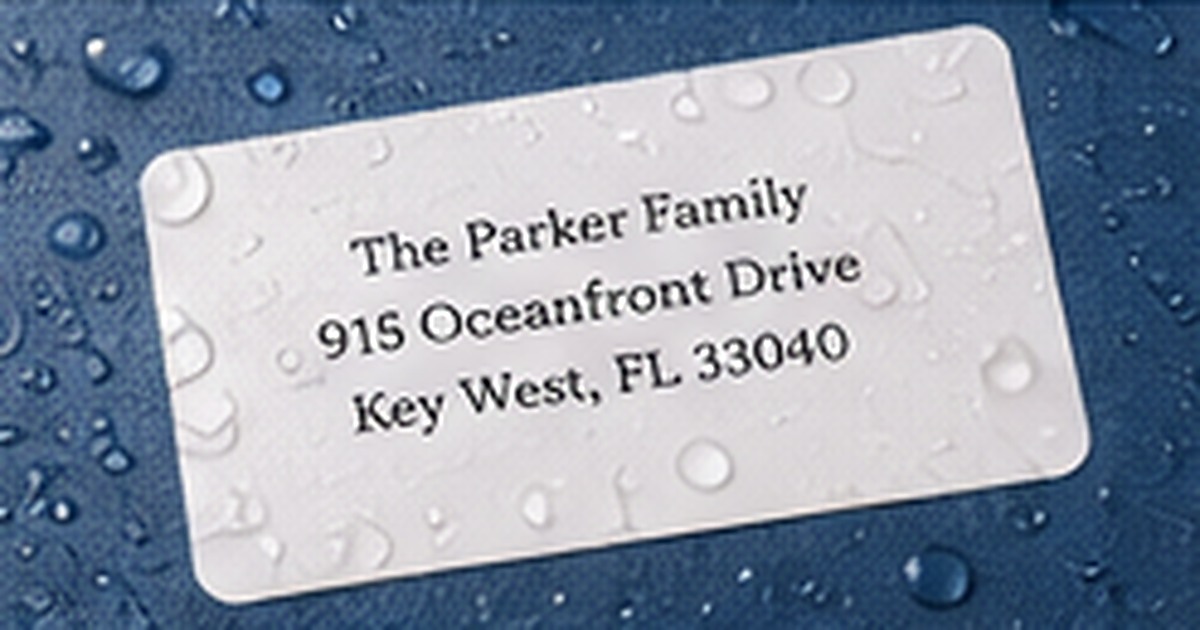
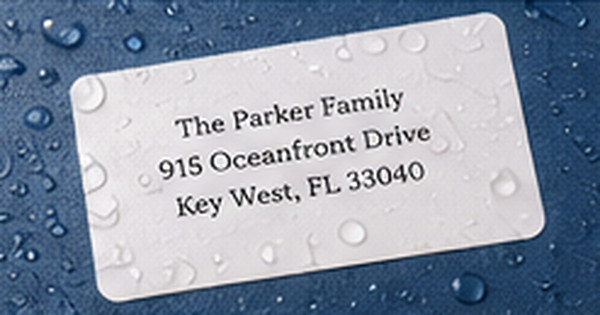
Address labels sometimes encounter rain, condensation, damp mailboxes, or wet hands. Whether the label survives depends on more than a single “waterproof” claim. The face material, printed image, adhesive, and surface beneath the label all contribute to performance.
Understanding those parts helps you choose the right label and apply it correctly. A label that handles brief rain may not be designed for repeated outdoor exposure or submersion.
Distinguish water resistance from full waterproofing
Water-resistant labels can tolerate limited moisture while remaining readable and attached. Waterproof materials are intended for more demanding exposure, but performance still depends on application and surface. For ordinary mailed envelopes, resistance to brief rain may be sufficient. Outdoor storage, travel gear, and containers exposed to washing require a more specialized material and adhesive system.
Consider the printed image as well as the label face
A durable synthetic face does not guarantee that every printing method will resist moisture equally. Ink or toner may smear, fade, or scratch depending on how the label was produced. Ask how the printed surface is protected and test a sample when the application matters. Clear films and laminates can add protection, but they also change the appearance and flexibility of the label.
Prepare the surface before application
Adhesive bonds best to a clean, dry surface. Dust, oil, condensation, and texture reduce contact. Apply the label at a moderate temperature, press across the full surface, and pay special attention to edges. Avoid placing it over seams, curves, or areas that flex repeatedly unless the material is intended for that use. Allow the adhesive time to build strength before exposing the item to moisture.
Match the label to the expected exposure
An envelope needs different protection from a water bottle, outdoor bin, mailbox, or suitcase. Describe the real conditions: occasional rain, daily condensation, hand washing, dishwasher cycles, sun, or abrasion. Choosing by the most demanding condition prevents disappointment. For postal mail, remember that the envelope itself may fail before a highly durable label does.
Run a simple home test
Apply a sample to the actual surface and wait the recommended curing time. Expose it to the type of moisture expected, then check edge lifting, smearing, clouding, and readability after drying. A realistic test is more informative than holding a label briefly under a faucet when the real use involves repeated handling or outdoor weather.
A realistic moisture test
For an outdoor storage label, clean the bin, apply the sample, and allow it to cure. Then expose the bin to the same shade, rain, wiping, and temperature changes expected in normal use. Check the label after several days rather than only immediately after water contact. For a mailed envelope, place a sample in light rain and allow it to dry naturally. Record lifting, smearing, and readability before choosing the final material.
Common wet-label mistakes
Do not apply labels to damp or cold surfaces and expect full adhesion. Avoid calling a product waterproof when only the face material has been tested; ink and adhesive may behave differently. Dishwasher, freezer, outdoor, and postal applications are not interchangeable. A label that survives one splash may still fail under repeated washing, abrasion, or long sun exposure.
Do one real-world review before finalizing
Before committing to the final approach, create one complete sample using the actual materials, names, address details, containers, or stationery involved in can address labels get wet. View it in normal light, handle it the way a recipient or household member would, and ask another person what they notice first. This last review catches small problems with scale, wording, placement, and usability. Record the approved choices so a future reorder or update begins from a tested version rather than an old draft or memory.
Quick checklist
- Identify the actual moisture exposure
- Confirm both print and adhesive durability
- Apply to a clean, dry surface
- Test a sample under realistic conditions
Frequently asked questions
Will a normal paper address label survive rain?
It may handle brief exposure, but paper can soften or wrinkle. A water-resistant material offers more protection for wet conditions.
Can a label be waterproof if the surface is dirty?
Even durable materials can fail when adhesive cannot bond properly. Surface preparation is essential.
How long should a label cure before getting wet?
Follow the product guidance. Many adhesives strengthen after application and perform better when given time before exposure.
Put the plan into practice
A thoughtful system is easier to use when the design and supplies support the real task. Explore personalized address labels to create coordinated pieces that remain clear, practical, and personal.