
Back-to-School Label Checklist for Teachers and Families
Posted by Affordable Address Labels on Aug 4th 2022
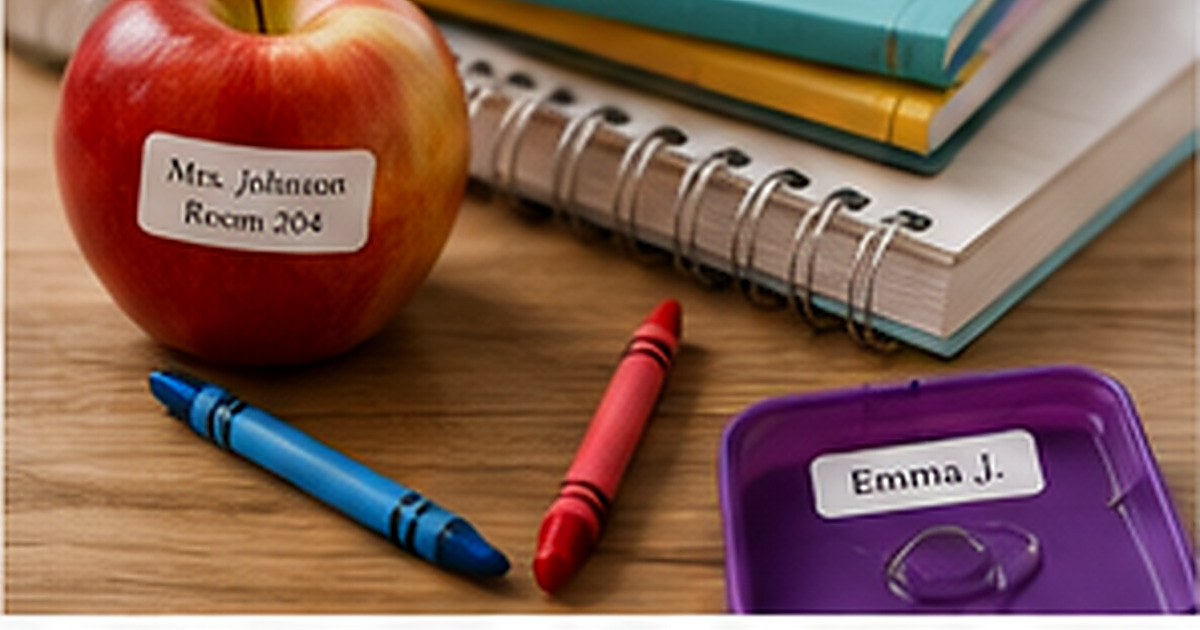
Back-to-school labeling works best when it prevents mix-ups without turning every item into a craft project. Students need clear ownership on personal supplies, while teachers need category labels that help an entire class use the same system.
Start with the items most likely to travel, be shared, or look identical to someone else’s. A focused checklist saves time and leaves room to add labels after the first week reveals what the classroom actually needs.
Label the items that leave the desk
Water bottles, lunch boxes, pencil cases, jackets, headphones, calculators, and device chargers frequently move between rooms or students. Use the student’s first and last name when school policy allows, or a first name and class identifier when privacy is a concern.
Place labels where they remain visible but do not interfere with use. Chargers may need labels near both ends; reusable containers need materials that match the washing routine.
Organize classroom supplies by action
Teacher labels are most effective when they tell students what to do: sharpened pencils, return work, turn in here, absent work, library books, or supplies to share. Action labels support routines better than vague decorative titles.
Use consistent colors or icons for categories, but maintain readable words. Visual cues help younger students and multilingual classrooms without requiring the system to rely on color alone.
Prepare paperwork and take-home folders
Label folders for homework, notices, completed work, and forms to sign. Include a return-address label on envelopes sent repeatedly to families, especially for clubs, fundraising, or school events.
Teachers can prepare a small sheet of class or school return labels for outgoing notes. This creates consistency and saves handwriting during busy weeks.
Build a small repair and replacement supply
Keep several blank labels, a permanent marker, and replacement name labels in the classroom or family supply box. Labels will wear, schedules will change, and new items will appear after the first shopping trip.
Review labels after the first month. Remove anything that creates confusion and reinforce labels on the items that receive heavy washing or handling.
Items most likely to need labels
- Water bottles and lunch boxes
- Jackets and outerwear
- Headphones and chargers
- Pencil cases and calculators
- Take-home folders
- Classroom bins
- Sports and activity gear
Start small, observe the routine, and then expand
Apply the back-to-school label checklist to one high-friction area first. Watch how people actually use the space for a week or two. The most useful labels support an existing routine or make the next action obvious; they do not require everyone to remember a complicated new system.
Use plain language that household members, students, or coworkers naturally use. If everyone says “snacks,” a label that says “individual shelf-stable refreshments” will not improve organization. Short, familiar words are easier to scan and easier to maintain.
Plan for change. Removable labels, blank replacements, and a record of the chosen style make it easier to revise categories without abandoning the entire system. A practical organization project should become easier over time, not more rigid.
Common mistakes to avoid
- Labeling every object instead of the confusing ones
- Choosing decorative wording that users do not recognize
- Ignoring moisture, washing, or surface texture
- Creating categories that are too narrow
- Failing to remove outdated labels
A careful proof and a small real-world test prevent most of these problems. Make the design attractive, but let accuracy, readability, and ease of use guide the final decision.
Frequently asked questions
Should a child’s full name appear on every item?
Consider school policy and privacy. Full names help recovery inside school, while initials or a first name and class may be better for items used in public.
What labels work on washable containers?
Use labels rated for the exact wash method and allow the adhesive to cure before washing.
How can teachers make labels easier for young readers?
Combine short words with simple icons and keep placement consistent across the room.
What should stay unlabeled?
Avoid labeling disposable items or surfaces where adhesive could create a safety or equipment issue.
Build a stationery system that fits real life
The best personalized paper goods are the ones you reach for often. Choose clear, accurate designs, store them where correspondence happens, and reorder before a holiday or event creates a rush. Explore personalized address labels, rubber stamps, and greeting cards to create a practical set for home, celebrations, or business mail.