
Address Labels for New Homeowners: What to Order After a Move
Posted by Affordable Address Labels on Mar 24th 2018
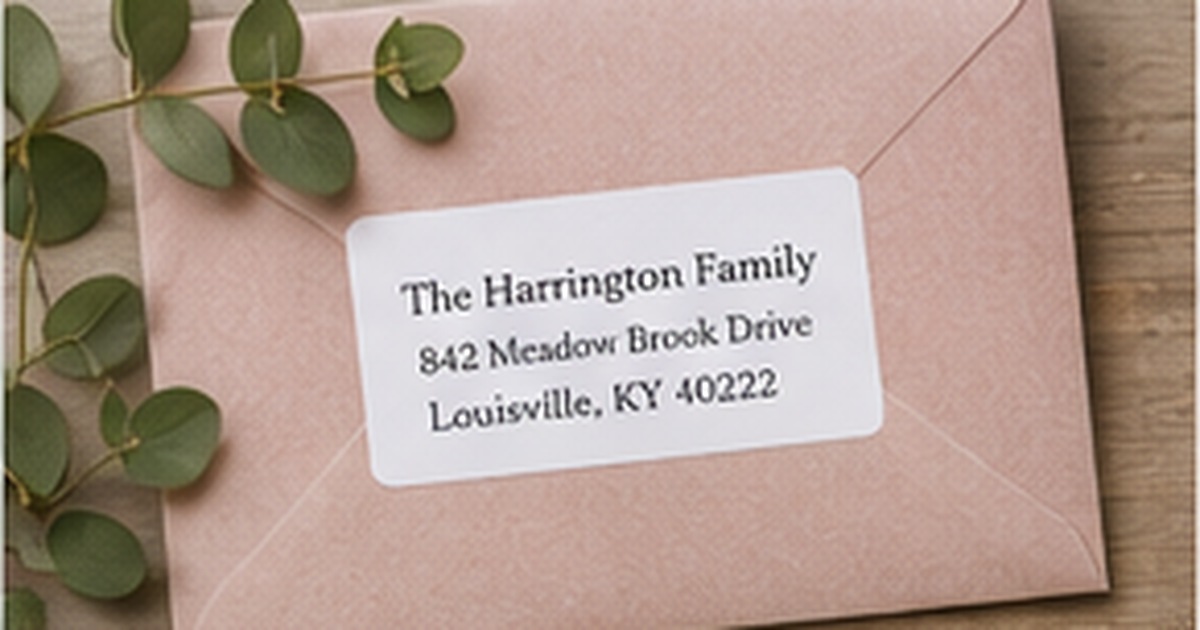
Moving creates a long list of practical updates, and return address labels are easy to overlook until the first stack of thank-you notes, invitations, or change-of-address cards is ready to mail. A thoughtful order can make the new address easier to use while also giving everyday correspondence a polished start in the new home.
The best label for a recent move is not necessarily the fanciest design. It is one that reflects the household name correctly, fits the longest address line, arrives at the right time, and is ordered in a quantity that makes sense while records and routines are still changing.
Confirm the exact address before designing
Use the official postal version of the address rather than the way it appears in a real-estate listing or on a utility account. Confirm directional abbreviations, apartment or unit information, ZIP code, and whether the street name contains a suffix such as Road, Drive, Court, or Lane. A single missing character can create months of inconsistent mail.
If the home is in a new development, verify that mapping and postal databases recognize the address before ordering a large supply. Keep a plain temporary label option available while deliveries, registrations, and household records settle into the same format.
Choose a household name format that will age well
A label may use a shared family name, two individual names, first names only, or a neutral line such as “The Parker Household.” The right choice depends on who sends the mail and how formal the correspondence tends to be. Avoid forcing everyone into a naming style that feels inaccurate merely because it fits a common template.
Think beyond the first housewarming cards. A flexible format should work on bills, school notes, birthday cards, and holiday mail. If household membership or names may change soon, an address-only design can be a practical bridge until a longer-term version is appropriate.
Order for the transition period, not forever
Estimate the first year of use: moving announcements, thank-you notes, holiday cards, school forms, and ordinary correspondence. Add a modest buffer, but resist ordering several years of labels before learning how often the household actually mails items from the new address.
Keep the approved proof, product number, and order date in a home-maintenance folder. If the design works, reordering is simple. If the label feels too small or the address wraps awkwardly, the first order becomes a useful test rather than a box of long-term leftovers.
Coordinate the label with new-home stationery
New-home correspondence often includes kraft cards, simple florals, architectural line art, keys, greenery, or a subtle house motif. Choose one visual idea and let the address remain the clearest element. A neutral design can move from housewarming notes to holiday cards without feeling tied to one event.
Before submitting the order, place a full-size proof on the envelopes you expect to use. Check the darkest color, the smallest envelope, and the longest household name. This simple test catches contrast and spacing problems that are easy to miss on an enlarged screen.
Use the first mailing as a quality check
Prepare five real envelopes before placing the labels into the stationery drawer. Include a bill-sized envelope, a small thank-you card, a moving announcement, and the darkest paper you expect to use. Address each item completely and make sure the label has enough room around it to look deliberate rather than squeezed against an edge or seam.
Mail one sample back to the new address. The returned piece will show whether the label stayed flat, remained readable after processing, and used the correct postal format. Correct any issue in the saved proof before a reorder, and update the household address file at the same time so future cards, online accounts, and family records use one consistent version.
Quick checklist
- Verify the official postal address
- Decide how household names should appear
- Test the longest line at actual size
- Choose a versatile first-year design
- Order a realistic transition quantity
- Save the proof and reorder details
Frequently asked questions
Should a moving announcement use the new address as the return address?
Yes. Using the new address reinforces the update and gives recipients a clear reference if they save the envelope or reply.
How soon should labels be ordered after closing?
Order once the address and move date are dependable. If construction, unit numbers, or postal recognition are still changing, begin with a small quantity.
Do new homeowners need both labels and a stamp?
Not necessarily. Labels work on more surfaces and can add color, while a stamp is efficient for repeated paper-envelope use. Some households eventually keep both.
Give the new address a dependable everyday format
A move is easier when the small details are repeatable. Start with a clear, flexible design, use the verified address, and order enough for the first chapter rather than the next decade. Explore personalized address labels and coordinate them with greeting cards for announcements and thank-you notes.